Saturday, June 24, 2023

Something I Wrote in 2019 About a Musical Analog to "A Failure to Communicate"


I want to say something about two of Morton Feldman's final works, Piano and String Quartet (1985) and Piano, Violin, Viola, Cello (1987). Something that, perhaps weirdly, seems to me connected with  the current polarization of political thought in America.

Both the piano quartet and the piano quintet go back to the late 18th Century. In fact, both Mozart and Beethoven wrote piano quartets in 1785, exactly 200 years before Feldman published his Piano and String Quartet. I believe, though, that Feldman's two works are unlike any other pieces written with this instrumentation in one important respect: in both pieces, the strings almost never play at the same time as the piano. In all prior (and, I assume, all later) works, there is some sort of "melding," harmonization, or counterpoint between the voices. In Feldman's, the only interaction or "discussion" is a sort of confused, sometimes completely uncomprehending, statement and response. In these works the strings and the piano are entirely polarized, in different worlds, and none of the members of either group (hands or fingers in the case of the piano) "disagrees" very much with anyone within its own tribe, There may be occasional slight discrepancies in the "view" expressed by the cello as compared with that put forward by the violin, but they are generally in accord, both rhythmically and harmonically.
So, in both works, there is this utter inability to really communicate or coalesce with "others." In each one can imagine two species (or cultural groups) slowly making their way through immense chunks of time, each entirely unable to grasp what the other is doing. Bad mimicry is the extent of the "understanding."
These pieces are often called "melancholy" because of their length, slow pace, and repetitiousness. And also, of course, because of the choice of chords and timbres Feldman favored throughout his career. But to me they also seem sad because they show inherent limitations, both within individuals and groups, in getting outside oneself. For me, each work is a good musical expression of both contemporary political polarization and what can happen to the earth when species fail to understand each other.
That is what the two pieces seem to me to have in common. There are differences too, however. The earlier and more aptly named Piano and String Quartet is, to me, quite difficult to listen to because the piano plays nothing whatever except single, upward-flowing arpeggios, separated by whatever (usually harmonics) chord the strings respond with. After about five minutes, I want to stick a pencil through both of my eardrums--especially when I remember that the piece will go on like this for over an hour. Each group here has nothing much to say: it is the incomprehension between ocean waves (at low tide) and a piece of sea glass that's stuck in the sand. Maybe this music could be background for those who find it relaxing while reading or trying to fall asleep, but I don't think one can really attend to it. I can't, anyhow. It's just irritating.
The later piece is very different in that regard. While there is again a ton of repetition, there is the sort of variety one can find on Fox News or CNN broadcasts or within a batch of various canines. They are again stuck in their separate, inviolable boxes, but are not really one-note Johnnies--at least to those who can "get" their spiels. Here, the name of the work is (I bet intentionally) misleading. They are not individual voices--piano, violin, viola, cello at all. Rather they are two groups again, but now, not entirely homogeneous. Each has become inherently interesting, even in its stubborn isolation from all other groups.
Anyhow, I think it is a great masterpiece, and a fitting swansong to Feldman's incredible legacy. You can listen to it here

Friday, June 9, 2023

Which Views are Sensible, Which Off the Wall?


Is it obvious that the Earth is a globe or is it actually more certain that it couldn't be? And does it really matter which view is the more natural one for an unbiased investigator to take? When we are assaulted on all sides by claims that may seem crazy on their face, should we commit to finding things out on our own and not taking anybody else's word for anything, or is the sensible thing to look around for experts, since we surely have neither the time, money nor expertise  to figure out most things on our own?  But what if the experts are wrong--or worse, members of a powerful group that has the intention of deceiving the rest of us? Who, what can we trust?

Kelly Weill's Over the Edge provides her deep take on these matters. It's about conspiracy theories and how they grab some people and seem to wrestle all the rationality out of them. Thanks to the internet,  craziness--including some very perilous versions--is growing by leaps and bounds. This makes her book not only gripping but politically important. You can read my review of it here

Naturally, Weill can't answer all the crucial epistemological questions: some have puzzled history's greatest thinkers. But it provides insight into both the most personal and the most dangerous angles. There is infinite Antarctic ice to be found here, and brazen hucksterism, and blatant antisemitism, and lizard people, and arguments with cracked premises and only insults for conclusions, and accidental death on behalf a cuckoo theory, delivered by a powerful steam rocket's impact with the Earth. 

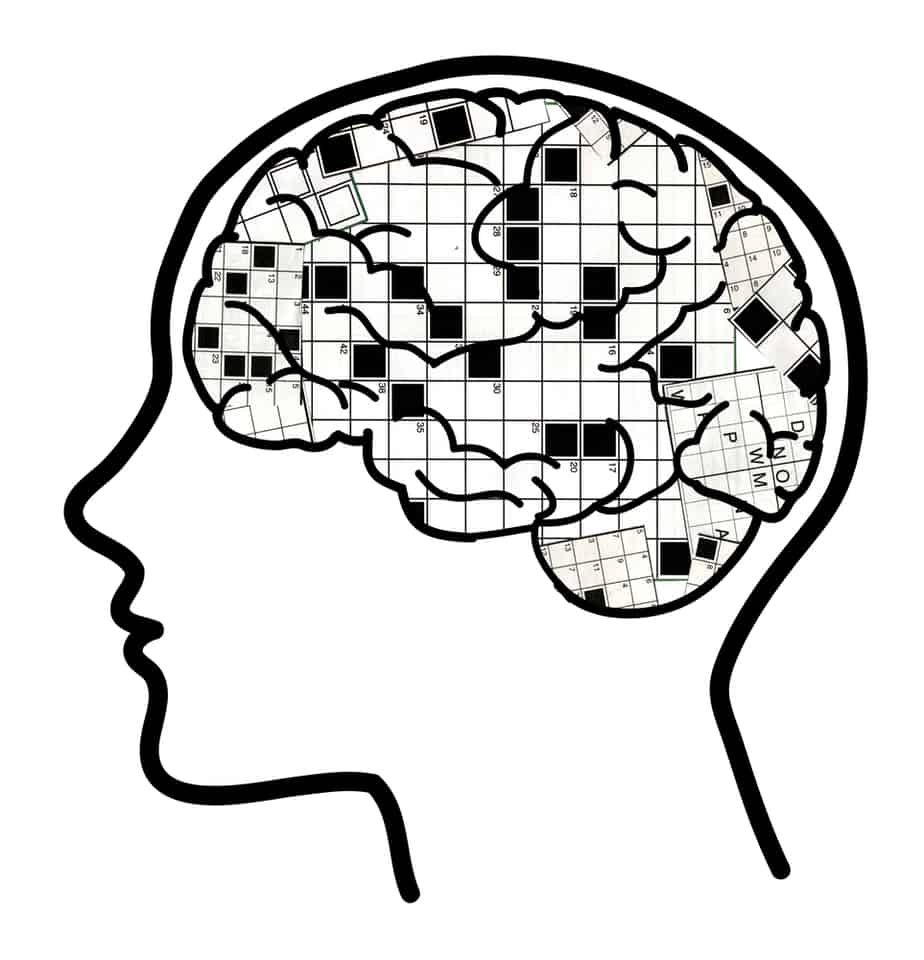
The crossword in the picture above is an homage to Susan Haack's classic Evidence and Inquiry, a a book whose "foundherentism" centers on the fact that we cannot just get lost in the "across clues": we must always also consider the "downs."


Thursday, May 11, 2023

Two-ish Cheers for Samuel Issacharoff's New Book


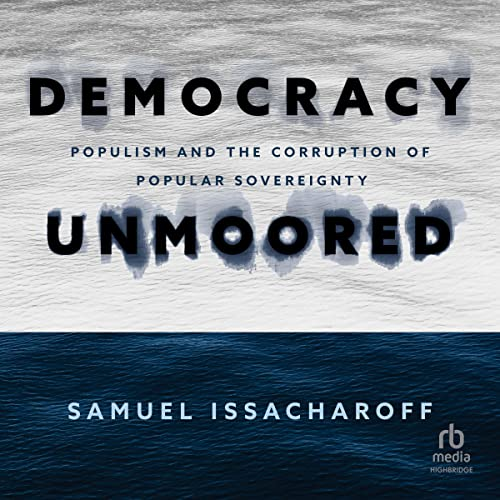
My Hornbook review of Democracy Unmoored is now out at 3:16 AM Magazine here. I had actually expected it to appear at a different venue, but, based on the multitude of revision requests I received (including some pretty strange ones), I got the feeling that the book review editor there vehemently disagreed with my take on the work. So I pulled it.* 

Anyhow, it should be easy to see that I think the book has considerable merits, even if Issacharoff's overall take is somewhat more conservative (or perhaps just less Rah! Rah! Democracy!!) than my own perspective. And I want to add here that interactions of that sort make me even more grateful to Richard Marshall for the pulpit he has generously afforded me at 3:16.

As always, comments are most welcome.


* Of course, it's also quite possible that they just thought my review was crappy. Naturally, I don't love that interpretation, but I'll let my readers decide that for themselves.

Friday, April 21, 2023

Yascha Mounk's New Book Isn't Really THAT Bad


Yascha Mounk's The Great Experiment: Why Diverse Democracies Fall Apart and How They Can Endure has taken some fairly visceral abuse of late. (See, in particular Ian Beacock's review in The New Republic.) This response may stem not so much from anything within the pages of the book but rather result from Mounk's participation on the punditry circuit--particularly within Persuasion, his centrist, neo-liberal Substack. In any case, he seems to have managed to inspire somewhat biting commentary from both his left and his right.

While I don't myself think The Great Experiment moves the discussion very far forward--and I'm pretty confident that none of Mounk's proposed remedies are capable of doing much to reduce the frequency or intensity of conflicts occurring either between diverse ethnic, racial or cultural groups or within individual groups--I also don't think this book deserves quite the pounding it has taken in some quarters. I mean, even sketches of inhuman brutality around the world along with the description of bromides claimed likely to reduce their number can be put engagingly, and--somewhat unusually for writers on democracy--Mounk has done that. His book is both elegantly written and interesting throughout, and those alone seem to me noteworthy merits.

Anyhow, my new Hornbook review of the work can be found here.

Monday, March 27, 2023

Why Not Parliamentarism?--Review and Rejoinder


My latest Hornbook Review at 3:16 AM is of Tiago Santos' excellent book on parliamentarism and can be found HERE. While we agree on the main issues, I did find a couple of things to complain about in Tiago's work (when do I ever not?), so I thought it would be nice to give the author an opportunity to respond here at luckorcunning. I'm grateful that he did generously provide the following remarks:

It is probably petty of me to write a rejoinder for such a flattering review, but anyway, here we are. It is clear that Horn and I agree on a fundamental level on the majority of issues. Still, I would like to address the two paragraphs where there is some disagreement and try to clarify my views. Setting aside that I am not sure I would endorse democracy if it were consistently associated with terrible outcomes, I would point out that the parliamentary type of democracy is exactly the one most prone to bringing about “what the people there want”. My point is that whatever justification you think is most important for a form of government, whether achieving good outcomes, or achieving what people want, parliamentary democracy is superior to presidential democracy.

I also do not think the book the book has an epistocratic tinge. I admit I do agree with Jason Brennan that the quality of votes can matter significantly. However, I don’t think an epistocratic form of government could be implemented in any practical way. One reason is that those qualities are distributed normally, so that any cutoff point would seem arbitrary. A second is that any such proposal, even if theoretically sound, would face insurmountable political challenges. However, the main point is that neither Caplan’s nor (Geoffrey) Brennan and Hamlin’s analysis of voting, which are the ones my book relies on, depend on there being any kind of difference in rationality among voters for the undesirable results (both from an outcome point of view as well as from a “what voters actually want” view) to come about. In fact, Both Caplan, as well as Brennan and Hamlin assume rationality.

And this does matter for the parliamentary-presidential debate. In elections for president, it is much easier for a candidate to choose a few salient issues (while ignoring the vast number of other problems a country may have) and run their campaign on those issues alone, making the presidential elections close to a plebiscite on them. Smart candidates with little concern to the actual consequences of their promises will pick exactly those kinds of issues which will gather expressive support. Candidates in parliamentary systems, however, will much more often depend on a well-organized party, which will not have the luxury of ignoring the consequences.

All in all, the fact that both a critic of epistocracy such as Walter Horn as well as a proponent of it as Jason Brennan have endorsed parliamentarism* over presidentialism appears to show the robustness of parliamentarism (or, conversely, the fragility of presidentialism).

*As readers of my book will have noted, Jason Brennan was very kind to have written a blurb for the book. In a terrible lapse, I failed to thank him in the acknowledgment section. So I hope I can use this opportunity to very belatedly thank him (and Horn, of course) for the words.

--Tiago Santos


Tuesday, January 10, 2023

Jan-Werner Muller's Book is Very Good


I have now reviewed a baker's dozen worth of books on democratic theory and closely related subjects for 3:16 AM Magazine since about the time COVID-19 started to amuse itself around the world by messing with human beings. Most of these books have seemed to me quite good, somehow managing to add a section or two to the vast quilt of sometimes useful information on self-governing that has gradually accumulated since Plato's time. For it's worth, I think this one may be the best of this little batch. There is just something...I don't know...wise--or maybe farsighted--about Muller's way of handling the issues. He seems to have a solid understanding of pretty much everything that needs to be reckoned with for a reasonable comprehensive theory to emerge. Not only does he consider all the possible counter-examples to views he suggests, he doesn't simply bat them away: he takes them into account. I suppose part of this vibe might be attributed to stylistic elegance. But it infuses the substance as well.

Anyhow, that's enough kvelling. My complete review can be found 
here.


Wednesday, December 21, 2022

Two Sets of Strange Bedfellows on How to Live


In an even more violent break from democratic theory than exemplified in my last couple of “Eastern Philosophy” entries (a practice I will almost certainly not continue–at least not very often–in the new year!), I decided to put together a seasonal “philosophy of life” piece containing positions found in the work of two prominent religious figures that I (a distinctly non-religious person) happen to find congenial. Whether this amalgamation should be considered an actual “philosophy” or is just a pastiche will, of course, be a matter of opinion. I hope, though, that it at least manages to be internally consistent in spite of its being little more than a concatenation of portions of Ecclesiastes (purged of all God talk and its own internal contradictions) and Buddhism (purged of all talk of Karma, rebirth and emptiness, and utilizing a simplified concept of Dependent Origination).


Even without making any attempt to produce a decent case for the view outlined here, this project seemed a lot to manage without significant research. Clearly, it would take a ton of time and trouble if I had to do it on my own. Having no ready human collaborators available, I called upon the vast computing power of ChatAI for help.† And with the assistance of that behemoth, I was able to fabricate the Frankenstein monster found below in about a week.


In addition to consistency, I hope our result manages a decent level of coherence, for it must be acknowledged that the two thinkers being thrown together here have only rarely been thought of as compatriots over the last couple of millennia. Of course, it's a lot easier to fit two world pictures comfortably together if the puzzle-solver is allowed to alter or truncate pieces wherever it is convenient to do so; and that is what ChatAI and I have done. But, in spite of the liberties that my digital assistant and I have taken on that front, I believe a number of contemporary Buddha and Qoheleth devotees may find our goulash agreeable. In any event, ignoring Buddhist warnings about the dangers of fabricating, what follows is our concoction.


Among the most basic Buddhist injunction is that each seeker should engage in a quest (though without craving!) for equanimity. And that aspiration must take precedence over any such activities as hating, mourning, killing, dancing, laughing or casting stones–all the sorts of behaviors the author of Ecclesiastes says (so eloquently) that there “is a time for.” Perhaps, Qoheleth's admonition that these activities should take place only in their appropriate times handles that peril. It may also be, however, that it's not only particular times that are required for the various activities, but also particular ways of weeping, laughing and the rest.


There are other tensions between the writings of these two sages too. But however stark the differences between these texts may be claimed to be, it should be obvious that there are a number of similarities as well. Consider, e.g., “The labor of the wise enriches them, but the foolish only exhaust themselves" (Ecclesiastes 10:15 CSB). This suggests that toil can bring fulfillment/enrichment, only so long as it is approached with wisdom and understanding. That sort of “mindfulness-in-action” is, of course, a staple of Buddhist thought.


Again, "He who loves money will not be satisfied with money, nor he who loves abundance with its income. This also is vanity" (5:10). This passage will surely remind many of the Buddhist principle that excessive craving for material possessions or wealth can never satisfy; indeed, it can lead only to frustration and disappointment.


It may seem that even Qoheleth is of more than one mind regarding our labors, claiming both their value and that they are all “vanity and vexation of spirit.” I think, though, this apparent contradiction is handled by realizing that when Qoheleth instructs us to take pleasure from “our works” at the same time he accuses nearly everything “under the sun” of being little more than vanity, he means that we should enjoy the labors themselves, whatever may be derived from their products. It cannot be denied though, that in addition to seeing labor itself as a fitting object of personal satisfaction, Qoheleth sometimes seems quite confident that no harm comes from enjoyment of such fruits of our work as wealth, success, or wisdom, so long as this gratification is taken in moderation and without excessive pride. He seems to say that when we partake of such goods, we must simultaneously remember that our lives are quite short and we can never know much about the mysteries of the universe or where it’s ultimately taking us. Some of us may be more prone to folly than others, but the basic, essential limits of human knowledge are largely unaffected by how rich, famous, or “wise” this or that thinker is or might become. We are all infinitesimal creatures.


In any case, hard work and productivity are claimed to be importantly valuable aspects of life if considered in the appropriate light and enjoyed in the appropriate manner. The theory, somewhat similar to that urged upon Arjuna by Krishna on the battlefield, is that engaging in honest labor provides its own satisfaction regardless of one's station, and those benefits may be obtained without necessitating the acquisition of any harmful attachments. Our toil may also contribute valuable distractions from our inescapable and universal fate; distractions which, if handled correctly, contain no toxins. In sum, Qoheleth may be understood to say that if we are careful to do so in a manner that avoids craving and clinging, enjoying food, drink, and other simple pleasures will contribute to happy and fulfilling lives. A Buddhist might put it that, to be safe, such pleasures must always be sought and ultimately enjoyed with mindfulness, and should be consequent only upon a meditation-engendered understanding of appropriate and inappropriate desires, based not only on their objects, but also their nature and intensity.


The Buddha agrees with Qoheleth that the quest for any sort of enjoyment must be of a particular, moderate sort:  "Those who are slaves to craving go round and round in samsara, bound by their… thoughts of 'I' and 'mine'" (Sutta Nipata 713).  This emphasis on the dangers of clinging and attachment, and their tendency to keep us trapped in a cycle of suffering and dissatisfaction can be found throughout the Suttas. Here is another example: "Bhikkhus, the craving of a person who is not free from craving for sensual pleasures is like the hunger of a person who has not eaten for a week. Bhikkhus, the craving of a person who is not free from craving for becoming is like the hunger of a person who has not eaten for a month. Bhikkhus, the craving of a person who is not free from craving for not-becoming is like the hunger of a person who has not eaten for a year" (Sutta Nipata 714). This is a key element of  Buddhist thinking: cravings and attachments all eventually become all-consuming. They must therefore be understood to be absolutely destructive to well-being. And in addition to the dangers of attachments, the Buddha also warns of harms necessarily attendant upon excessive anger, aversion, jealousy, resentment, hate, etc.



Not an entirely melancholic religion, Buddhism provides an antidote to this predicament in its teaching of Dependent Origination. This law of universal causation is thought to provide a way to prevent the acquisition of a wanted good–or the resentment, jealousy or disappointment ensuing from a failure to obtain it–from leading one into addiction, depression or withdrawal. According to the theory, the solution to omnipresent suffering starts with the recognition that every event and individual object in the world arises in dependence on other factors as well as causal laws. This means that no state of affairs or thing exists independently or in isolation from prior and concurrent causes and conditions, but each is instead interconnected with and dependent on other states and things for both its existence and its particular characteristics. As we have little control over most of the relevant prior conditions that affect us, we should infer that we have quite limited control over our fates–except as they are a function of acceptance/resistance of what happens to confront us.


But why is there claimed to be this crucial difference between our control over what happens to us and our subsequent reactions? Isn’t all of it beyond our ability to change? The Buddhist idea seems to be that we retain a portion of autonomy in spite of the universality of Dependent Origination. How is this possible? In attempting an exit from this maze, I think it is helpful to begin  by recognizing that various wildly different species of “cause” pop up in the many specifications of Dependent Origination found in the Suttas,* and to proceed we must first excise from the theory all supposed elements that are not clear examples of efficient causation (an event X bringing about event Y, the way a shove may bring about someone's fall). This simplification is important because, e.g., it is odd to call oxygen (or, say, the shape of the Earth) “the cause–or even a cause–of one of Shakespeare’s sonnets or of Argentina’s recent victory in the World Cup Final. Without the removal of several of the types of elements commonly included in the Dependent Origination theory, we will be left with just such misleading anomalies. To say, for example that John's misstep was "caused by ignorance" is bound to lead to the same sort of confusion. However, after we complete a filtering intended to leave only such items as can be reasonably claimed to be efficient causes, we will see that that even the remaining (billiard-ball-hitting-type) events are not by themselves sufficient to do the work proposed of them: each is still only a necessary predecessor that cannot make anything happen without help.


How does this lack of sufficiency provide an escape from utter powerlessness? Consider just these causal event types that remain in our modified version of Dependent Origination: ".....From contact [through one of the six sense media] as a requisite condition comes feeling. From feeling as a requisite condition comes craving. From craving as a requisite condition comes clinging/sustenance. From clinging/sustenance as a requisite come….sorrow, lamentation, pain, distress, & despair." (Samyutta Nikaya 12.2). Arguably, we have examples only of efficient causes now: a particular perceptual experience causes a particular feeling, etc. But it remains the case that more seems to be required to ensure the emergence of any particular consequence that is specified. The Buddhist idea is that human beings can prevent the addition of some of these required “extras.” We can, that is, simply stop the process between a percept and particular sort of feeling or between dangerous types of feeling and the emergence of cravings. For according to Buddhist doctrine, we can learn to dissociate our sense perceptions from ensuing incidences of either  pleasure or pain. Thus, from sense-content no particular feeling need arise, and even if we cannot stop things there, craving and the rest need not inexorably follow. That, in a word, is the power to stop new addictions and overcome old ones. In the same way, aversions and other negative responses can be avoided. This ability is thought to be the key to overcoming dukkha, the existential suffering that may seem to be irrevocably attached to human existence.


There thus seems no problem with taking Qohelethian, tempered enjoyment in simple pleasures: those who partake in that fashion need not become overly attached to anything as a result. No more, certainly than will be associated with minimal nutritional sustenance. Gaining this ability would seem to allow us to live more balanced and less ascetic or guilt-ridden lives. Our goals must always be sensible ones however, and our strivings to reach every one of them them restrained. A recognition of the interdependence of all living beings may also encourage the cultivation of a sense of compassion for others and help us overcome resentment and jealousy. It may be that to reach our goal of equanimity we will need to walk some distance along the Buddha’s Eightfold Path of right speech, right thinking, right livelihood and the rest, but we need not follow it down any turning where it disallows such activities as laughing, weeping, dancing, eating, drinking or mourning; perhaps even hating and killing can be allowed when and where there is good cause and these activities are undertaken without excessive malice.


It can be seen that recognizing the truth of Dependent Origination must involve accepting the limits of our ability to control our destinies or understand what will happen to us after we die. It also seems to entail that wishing and petitionary prayer are not only a waste of time, but may actually be pernicious, both because they are inconsistent with an understanding of the causal constraints on everything in the known world, and because they may be expressions of unhealthy types of desire. By acknowledging the uncertainty and impermanence of life, we can let go of such attachments and live in the present moment with a sense of peace and contentment. Again, however, we must maintain only sensible goals and be willing to work at achieving them, rather than spend our time wishing or praying.


So far, so good. But where both sages seem to me to err is in their failure to recognize that claims about such matters as God, rebirth, “self,” essences, nirvana, and karma are not the sorts of things that can ever be substantiated. For these are, as philosophers say nowadays, “heavyweight” matters.  All such assertions go beyond what any person–or even any scientific investigations–can confirm. Being metaphysical queries, obtaining definitive, universally satisfying answers to them would require an ability to go outside all "conceptual schemes" or "categories" produced by our upbringings, language, philosophical training, individual temperaments etc.  We are, in the words of Everett Hall all ensconced in what he called "categorio-centric predicaments" from which no one can escape. So, for good or ill, deep wisdom of the ontological (What is there in the world?) or axiological (What are the right things to be done?) kinds is simply impossible for homo sapiens.# 


No doubt both Gautama Siddhartha and Qoheleth are usually considered religious figures rather than philosophers, and their works may be counted as “wisdom literature.” Their readers and admirers may therefore not care too much about my concerns with respect to epistemic limitations. However that may be, I hope a feasible course of action for the troubled among us who are uncomfortable with religion will have begun to come into view. For it seems to me possible to find a humbler, more judicious place to rest in the works of these two thinkers, a plateau where even a skeptic might find comfort.


It is interesting that both the Buddha and Qoheleth sometimes speak as though they understand and accept the limits of rational thought, but at others clearly forget these constraints and make claims that cannot be justified without revelation. Ecclesiastes contains occasional God-assumptions that should be considered inconsistent with rational limits: "[W]ho can tell someone what will happen after he is gone? (10:14) and “I applied my heart to know wisdom and to know madness and folly. I perceived that this also is but a striving after the wind….He who increases knowledge increases sorrow." (1:16-18) And for his part the Buddha famously upbraids those of his monks who pestered him with what he considered to be pointless philosophical queries by reminding them that he had never promised to "...elucidate to you either that the world is eternal, or that the world is not eternal, or that the saint neither exists or does not exist after death." And he tells them that "The religious life does not depend on the dogma that the world is eternal; nor does the religious life depend on the dogma that the world is not eternal.  Whether the dogma obtain that the world is eternal, or that the world is not eternal, there still remain birth, old age, death, sorrow, lamentation, misery, grief, and despair, for the extinction of which in the present life I am prescribing.  The religious life does not depend on the dogma that the world is finite. The religious life does not depend on the dogma that the soul and the body are identical. The religious life does not depend on the dogma that the saint both exists and does not exist after death; nor does the religious life depend on the dogma that the saint neither exists nor does not exist after death." He explains why the religious life fails to involve expounding on such matters: "Because this profits not, nor has to do with the fundamentals of religion nor tends to aversion, absence of passion, cessation, quiescence, the supernatural faculties, supreme wisdom, and Nirvana; therefore I have not elucidated it." (Majjhima Nikaya 63)


Now, it may be objected that despite my own assurances to the contrary, there is metaphysics aplenty in any claim that we can somehow exempt ourselves from causal laws by dissociating various perceptual experiences from pleasure, pain, craving, or aversion. In response, let me first say that I make no pretense of eschewing metaphysics entirely. To the extent that I assume the existence of people, causes, aging, individual suffering, death, and the like, I adopt a common-sense worldview that cannot be strictly demonstrated to be veridical. But as to the specific objection regarding allegedly sneaking out of the jaws of Dependent Origination in order to capture some sort of “equanimity” for those practicing “right meditation,” I insist that I am relying on empiricism only. I suggest simply that one may try and see, and I note that, at the very least, many throughout history have claimed success in their own searches for equanimity and peace by the use of the proffered techniques. I abjure from speculations about what may be beyond what we can experience for oneselves, and I propose no general theories involving free will or determinism.$


In summary, the patchwork philosophy of life concocted here with the help of my computerized assistant out of various tenets of Qoheleth and the Buddha acknowledges the depth and inescapability of human ignorance, emphasizes the importance of hard work/productivity, and, eschewing even partial asceticism, confers value upon simple pleasures. However, success in achieving a happy and fulfilling life is argued also to generally require diligent mindfulness, whatever may be one’s luck (or lack of it) “under the sun.” The good news is that, no matter the level of success, wealth, or wisdom we may happen to achieve--whether by luck or cunning-- we can, by aspiring for equanimity and practicing moderation and mindfulness (even in that quest!) overcome harmful craving and unhealthy attachments and come to live in the present moment with a sense of peace. Reaching a state of such contentment may require an understanding and acceptance of Dependent Origination in something like the form elucidated here, and there is little doubt that such understanding is useful in this sort of quest. But, however the case may be with respect to propositional knowledge of the workings of causation in human affairs, it is clear that one must learn how to carry out certain dissociative techniques in accordance with the precepts of this theory. The balanced approach to life set forth herein can help practitioners find both fulfillment and calm–as well as relief from guilt–even in the face of both pervasive constraints on our autonomy and the apparently ineliminable uncertainty attached to every single philosophically "heavyweight" proposition that can be asserted, whether factual or moral.


**************************************


† For a brief and fairly breezy explanation of the background for and mechanics of my collaboration with ChatAI, see my new essay in Erraticus.


* So, for example, ignorance is not the sort of thing that can be an efficient cause, however it may be thought to function in “producing” our (defective) understandings of the world. Nor should “name-and-form”  be thought to be an efficient cause, even if it’s true that we could have no concept of causation without its operation. Finally, neither birth, nor aging and death seem to me appropriately placed in customary statements of Dependent Origination.


Techniques for throwing a wrench into this machine can be found in Buddhadasa, Under the Bodhi Tree (2017) and Leigh Brasington, Dependent Origination and Emptiness (2021). It is important to understand, however, that neither of those authors–unorthodox as they may be considered by some traditionalists–would ever suggest making amendments to Buddhist doctrine. When they differ from other, more orthodox Buddhologists, they simply insist that interpretations contrary to their own exhibit misunderstandings of the Suttas. My skeptical bent (and, perhaps, excessive hubris?) has made me quite comfortable with changing or deleting any tenet that seems indefensible--or even inadequately supported.


 For arguments in support of the possibility of these perhaps unintuitive claims, see Richard Hall, Are Pains Necessarily Unpleasant? (1989).


# This notion is explained and defended by Everett Hall’s (Richard's father!) in his Philosophical Systems: A Categorial Analysis (1960). I have written extensively on this subject--and Hall’s work generally--in my The Roots of Representationism: An Introduction to Everett Hall (2013).


$ I talk in some detail about various types of meditation and the practical effects they can have on one’s life in my The Perennial Solution Center (2003).


Monday, December 5, 2022

A Deeper Dive Into Choosing, Wanting and Getting


Not long ago I uploaded a piece here about the apparent tension between obtaining the goods of the world and what might be called an Eastern take on craving–any position according to which desires are essentially harmful to the desirer. However, as I mentioned in that entry, it is arguable that trying to conquer the natural tendency to want things in the world might itself be seen as just one more desire. This tension has sometimes been called “the paradox of desire.” In an interesting 1979 paper in Philosophy East and West, A.L. Herman provided what he termed a solution to this paradox of someone achieving a condition of desirelessness through desiring it. His way out was to suggest that desirelessness can be obtained not by wanting it, but by coming to understand that one cannot actually obtain it by wanting it. Instead, after the manner of a certain McCartney, one has to “let it be.”     


Before going into this matter in more detail, I probably should indicate again what this issue, which has mostly stayed within the boundaries of Buddhology, has to do with democratic theory. Unlike most (maybe all?) other normative democratic theories, I attempt in my book to derive electoral procedures from conclusions I reach regarding what makes states of affairs good for persons or groups. My inquiry into prudential value relies on an axiom according to which, for both individuals and polities, The More Good, The Better. The goods I settle on, based on a post-WWII suggestion by American value theorist Everett Hall, are successful free choices--even if they are imprudent choices in the long run. But if all successful choices are a breeding ground for future desires because craving is in reality always bad for the person doing it, this would seem to be a big problem for my theory. Furthermore, to be fair to my critics, an aspiration to live a certain way seems quite a distance from the sort of choice that could be part of the basis for public policy. Surely it can be argued that this association is largely metaphorical. So I will take this opportunity to investigate the issue further here.


One particularly engaging philosopher and Buddhologist, David Burton, has devoted a significant  portion of his work to the question of why so many Buddhist schools are focused on (i) the connection between craving and suffering (dukkha), (ii) exactly how appropriative desires (i.e., the bad type) might be thought to be the cause of unhappiness even when one gets what one wants, and (iii) what people must do to free themselves from what is taken to be the principal cause of human suffering. Burton centers his discussion of these issues on the Buddhist contention that all items in the universe–not just those resembling such things as garden rakes (or ideas of them), but things like persons and prime numbers–are fleeting and impermanent: little more than short-lived ghosts. The Buddhist theory regarding the consequence of omnipresent impermanence is intuitive: Why wouldn't an impermanent thing's desire for the lasting appropriation of some other impermanent thing--say, fame, fortune, sexual pleasure, physical health or a comfortable home life, cause unhappiness? Burton accepts this (arguably questionable empirical) conclusion and then considers how one might transcend such proclivities. He thinks one can do so only by reaching a deeper understanding of the claimed essential impermanence of absolutely everything. The idea is that if we really (REALLY) understand that nothing lasts, we will stop wanting to appropriate things in order to have them always with us. Given this picture, can happiness be found. And, contrary to any theory like mine that relies on the principle of The More Good, The Better, achieving well-being does not require the choosing of any "goods" at all.


Burton recognizes that he and many others already do seem to realize that many (perhaps most) desired items in the world are fleeting, and some of these folks, including Burton himself, also hold that there are no permanent souls, i.e., they take even persons, soul-free as they believe we are, to be in no sense everlasting. But he can't deny that such recognition generally does not cause the extermination of either suffering or future cravings. That seems problematic. How have the many generations of Buddhist sages failed to see that understanding that everything is fleeting simply doesn't put an end to either desire or misery? Well, says Burton, there’s knowing and then there's knowing. He says that we must distinguish a flimsy sort of propositional knowledge (“knowledge by description”) from a deeper perceptual kind of knowledge (“knowledge by acquaintance”).


Those who have taken one or two philosophy courses are likely to agree that both Frank Jackson’s famous Mary, who knows everything about the color red but has never herself experienced redness, and the fellow in John Searle’s “Chinese Room,” who in a quite limited sense can be said to know the definition of every word in some foreign language with which he's basically unfamiliar because he has learned to match each one of them with a synonymous word or phrase in that same foreign language, are both missing something crucial. Surely their "understanding" is severely limited. So, Burton speculates, some of those who seem to understand that every worldly thing is impermanent may have only a bloodless, propositional type of knowledge of the fact that nothing in the universe is lasting, and it could be that that isn't enough to develop a thoroughly life-changing dismissal of all appropriative desires. 


Burton is untroubled by Herman’s paradox of desire, because he sees two ways out. First, he notes that many Buddhists have long distinguished lustful, grasping types of desire from what might be called “aspirations.” Wanting to rid oneself of all cravings would, of course, be considered an example of the latter, beneficial-rather-than-harmful, type of wanting. And, as I have conceded above, it doesn't seem to be quite fair to count such a "desire" as included in the sort of "choices" made a body politic. In any case, Burton says that rather than craving desirelessness, we can, as Herman had also suggested, strive for it in some less appropriative way. Alternatively, if one doesn't want to distinguish two types of wants, one can instead throw a partition between two sorts of objects of desire: those for things that are good for us and those generally addictive items that not only don’t make us particularly happy when we get them, but actually make our lives worse the more we obtain them.  Either solution saves us from any alleged paradox according to which we can get what we’re looking for only if we can get to a state where we don't want or get anything at all. (My own Hallian position on prudential values doesn't make a sharp separation between those two approaches, since it makes a CHOICE a matter involving both the wanting and an obtaining.)


Returning to the types of knowing distinguished by Burton, that scholar suggests that only one sort–acquaintance–is the sort of thing that can transport us to where he believes we should all like to be (Nirvana), I do agree with him that we need to distinguish two quite distinct types of knowledge here. I just think he’s settled on the wrong two. A more natural distinction to turn to here, would, I think, be that between knowing that and knowing how. It is this distinction, made famous by English Philosopher Gilbert Ryle, that clarifies that it is not propositional knowledge that enables one to, e.g., ride a bicycle, but an entirely different thing: a bodily ability. We cannot rely on book learning to stay afloat when trying to swim, and, to look at it from the other direction, it's also true that we are unlikely to be able to write a book about the mechanics of swimming just because we have learned how to do a couple of strokes, because providing theory requires propositional knowledge. Knowing that and knowing how are importantly different animals.


Why does Burton not just turn to knowing how to give up our cravings when that move would seem to take care of any possible paradox? I think it's because he has the terribly ambitious goal of reaching "Arahantship." That is, it’s not just equanimity that he’s looking for, i.e., relief from occasional bouts of dukkha, but full Awakening--a permanent escape from the wheel of Samsara altogether. He thus thinks that complete understanding is necessary, and knowing how just can't supply anything of that depth. What Burton is seeking must provide what might be called a thorough “grokking” of the natures of impermanence, selfhood, craving, clinging, and suffering. So, while he understands the possibility of a move toward "mere ability," he is not interested in taking that tack himself. Instead, he embraces what has been a so-called “intellectualist position” regarding knowing how to do things. On his Awakening-oriented view, the ability to stop craving requires an entire elimination of ignorance, the achievement of wisdom. Thus, for Burton, “mindfulness,” which one would naturally consider a technique that might be used to kill off this or that particular craving, must, to be effective, be a form of knowledge by acquaintance, for only that would be inconsistent with ignorance in the relevant area. As he puts it, “craving and ignorance [are] interwoven and mutually supportive. They cause one another, and the weakening of one results in the weakening of the other.”* So, while he doesn't deny that there is an ability that must be obtained, he elaborates that,


When one begins to practice the Eightfold Path, one would gradually acquire what modern epistemologists refer to as ' competence knowledge', 'capacity knowledge' , or 'knowing how' . That is, with experience and effort one would learn how to cut off craving and attachment by applying the Buddhist teachings about right action, right speech, right effort, and so forth. One would not simply know the theory; one would actually be doing it…. In this respect, the Buddhist training can be likened to the acquisition of a skill like riding a bicycle or learning to swim…. Thus, one's conviction that craving causes suffering and that cutting off craving is the way to eliminate suffering would become stronger. Furthermore, one would become convinced that the Buddhist path is the way to achieve this result.*


While Burton acknowledges this connection between these two types of knowledge, he seems to remain unsatisfied with any "mere skill"--even if it might be claimed to allow one to stop craving or clinging to a troublesome attachment. Instead, he seems to insist that any such aptitude be associated with a grand theory about what the self and world are like. In other words, it's Burton's contention that to achieve the real Buddhist prize of Nirvana, what we learn on the craving/aversion front must eventually lead to total Awakening, That means that meditation/mindfulness cannot be used simply to learn how to disengage pleasure or pain from particular experiences.** It can't just be a practice that enables us to dissociate some experience from pleasure or suffering: there has to be an entire epistemological/metaphysical theory interwoven with these concepts that is both believed and demonstrable.


I think Burton is wrong about this, and I take it to be an entirely empirical question whether any non-sage has ever learned to stop craving this or that item. I myself believe that one can (i) want to get out of the craving/aversion business and (ii) gradually learn to do so without embracing a vast quantity of highly controversial philosophical theory. But I understand too, that that means lowering one's bar and accepting the possibility that Arahantship may simply be too lofty a goal for most mere mortals.In any case, political theory is not made for gods but for regular folk.

To conclude, if I may descend now from the heights of Buddhist metaphysics to the more mundane world of democratic theorizing, let me conclude by saying that I think it is fairly obvious that an ability to discard inutile graspings in order that a person's or group's remaining choices can be for items that actually make lives better (if only for a moment) is an ability that many can learn/obtain without becoming monks, sages or Kant-level philosophers. The existence of that potential is all one needs to justly claim that there is nothing at all paradoxical in insisting that The More Goods Chosen, The Better. Put another way, even devout, practicing Buddhists can be considered to be learning how to achieve equanimity through giving up particular unhealthy cravings/clingings, rather than necessarily to be reaching for the goal of obtaining some sort of perceptual knowledge that will eventually carry them to Nirvana. Furthermore, whether or not one shares the Buddhist belief that acting on such a goal will actually improve one's own or anybody else's life (or extinguish anyone's ignorance), intentional progress on such a path carries with it no accompanying tincture of paradox.


*David Burton, Buddhism, Knowledge and Liberation, A Philosophical Study (2004).

** On the claim that even the severest pains need not cause suffering, see the extremely interesting classic paper by Richard Hall (Everett's retired philosopher son!), "Are Pains Necessarily Unpleasant?" (1989).

Friday, October 21, 2022

Partisanship, Polarization, and Halloweenish Fears


Ok, so hundreds of people running for office in elections being held in the U.S. in a few days are guaranteeing that if they win, they already know which party's candidates will certainly prevail in  future elections. And a lot of those people are candidates for secretary of state, which means they'll be in charge of those future elections. That should seem like a pretty dangerous situation to anybody who thinks elections should be fair. 

And that is the kind of thing that has caused me to hide under my bed with my laptop--not just for the Halloween season, but for the foreseeable future. 

Lots of pundits talk about how polarized the country is now, but sometimes they probably mean to say "partisan" rather than "polarized." The difference is that, while two groups who absolutely despise one another are certainly hyperpartisan, that alone wouldn't make them polarized. Polarization requires that the opinions on issues of a person or group have moved out toward "the polar regions." Consider the Crips and the Bloods. They've generally been extremely partisan, but they're not polarized: in fact their views may be in accord on almost everything except who are the best people to hate/fight. It's pretty clear, though, that the Dems and Repubs aren't just engaging in that sort of Hatfield/McCoy imitation. They really have been moving farther and farther apart in addition to hating each other more and more each day. That's not good--especially when one of the parties has become enamored with autocrats like Viktor Orban and doesn't seem to care much about maintaining democratic norms in the U.S. 

This may explain why I'm starting to bring several seasons worth of provisions under my bed with me and the laptop. (I know: everything down here is going to get extremely dirty. But...what can you do? If it seems weird to people who stop by, I'm thinking of blaming my condition on a particularly acute ability to perceive poltergeists. Not sure, but I may have picked up this power from Neil of The Young Ones.)

Anyhow, my newest Hornbook review, of Sam Rosenfeld's The Polarizers, a detailed history of how things in the U.S. got this way, is now up here. Rosenfeld mostly blames an old (1950) American Political Science Association study for for our current, perilous situation. As he tells it, back in Eisenhower's day, the parties really were more like sororities without dues, clubs in which stated goals are mostly just window-dressing. But the APSA study made the case that there should instead be crystal clear distinctions between the policies that each group would like to see enacted. Such a change would allow the electorate to know what every candidate a party puts forward must stand for and so have reasonable expectations of what to expect if the people they vote for win. Since on this view there shouldn't be a mix of left- and right-wingers in each party, we can infer that bipartisanship wasn't seen as a very important objective.  

Well, except for the fact that the Republicans now won't deign to provide any platform at all (Whatever Trump happens to want at any moment is just fine!) we now seem to have precisely the condition the APSA committee called for. The two major parties in the U.S. have completely sorted: there are no more Dixiecrats or Republican Ripon Society members to be found either hither or yon. There's very little incentive for legislatures to do much besides making the other party look evil, stupid, and incompetent. In other words, things are extremely bad in the U.S.

Would a different package of electoral rules be better for the country? Absolutely! With or without perfect sorting, every democracy requires both majority rule and (proportional) minority representation; we have neither of those now. Maybe we also need more parties, since, as my earlier entry on that subject indicates, it seems that we can't do very well without them. Furthermore, as Lee Drutman argues in his Doom Loop book, two seems not to be a particularly magic number. Rosenfeld doesn't get into the theoretical stuff himself, but according to what used to be called "Duverger's Law," if we had multi-winner elections, we'd probably have more parties. (I want to point out, though, that if, like federalism in big countries, parties are needed, they will produce some of the same problems that subsidiary districts make for majoritarian democracies. Unalterable ethnic connections and other sorts of closely held identifications inevitably also generate those issues. I discussed that kettle of complicating but probably ineliminable fish here.)

Whatever may be done with parties, the main thing, as I press over and over in my book, is that we need a new and different form of democratic populism: a carefully distilled variety. And, of course, we need a renewed affection here for the rule of law. Real democracy requires a much more sensible constitution than we now have, one that is both more democratic, and also less focused on what may NOT be done. I'm sorry to say that getting involved in a "Save our democracy" movement, as if we actually ever had a decent system here, simply isn't going to cut it. There's never been anything closely resembling authentic democracy in the U.S. And what has perhaps been justly describable for a couple of centuries as 'someplace south of mediocre' (except in it's treatment of rich white males) has now descended to the subterranean level of  'absolutely awful' for nearly everybody.

To me, this is all not just exasperating: it's horrifying (which is why I just pulled a hot plate under here with me and am now frantically searching for another outlet). So let me close by saying that while I wish you all a safe holiday season and wonderful new year, I don't really believe that those lovely things are in the cards. 😣  

Nevertheless, to show that I can be supremely generous in spite of my intense fear and loathing, here's an old tape loop piece of mine you can use to scare trick-or-treaters while I'm down here tending my bedpan and trying not to inhale dust bunnies. Or you can use it for personal psychedelic purposes. I don't care. The point is, even if Rowman & Littlefield  continues to refuse to reduce the price of my book much below 40 bucks, you won't be able to say I never gave you anything for free.