Friday, July 19, 2024

Can ANYTHING Be Done?


Naturally, many Americans are extremely concerned about the upcoming Presidential and Congressional elections. I include myself in this group. Even those who are seemingly safe under their beds have a lot to be worried about. 

But from my prone, dusty perspective, the recent Supreme Court decisions regarding Presidential Immunity and the regulatory authority of Executive agencies are much more concerning because they will remain in effect whoever wins in this election. Other less recent decisions have also made the country either explicitly much less democratic--like Citizen's United, or much less satisfied with the laws that intimately affect them--like Dobbs.

Are matters entirely hopeless? Given the current  provisions of our Constitution and the the current composition of the Court and the cultishness of one of our two major parties, it seems to me quite difficult not to answer this in the affirmative. One of these conditions could be altered by immediately "packing" the Court, but, presumably any such solution would be short-lived. It would surely be "unpacked" (and perhaps "repacked") by any Executive that doesn't like how it looks at any given time. And it seems to me that most of the Constitutional alterations that I have seen proposed over the last decade would do little given the current Supreme Court's willingness to interpret whatever turns up there in any fashion a certain Executive would prefer.

Would anything help, assuming for a moment there was actually time for it to be accomplished before the next election? Well, given the near impossibility of amending the U.S. Constitution, I'm afraid the answer is NO, no matter how much  time was available. But I can think of  some Constitutional provisions that, if, per impossibile, could somehow be shoved into our outdated "founding document," would have amazing curative powers. 

The U.S. citizenry simply must have the power to recall Federal elective officials and reverse Supreme Court decisions. There should also be the possibility of Federal referendums. I'm not sure anything short of these admittedly huge alterations could provide much more than temporary symptomatic relief.

I wrote about these issues in some detail in my book (the amount of detail was partly a matter of what I now think was an error in my thinking about Reversal). Under our current dire circumstances, I will reproduce most of this material here. As I do this, I will point out (using braces { } and courier font) the mistakes I think I made in the book. This material is all from Chapter 9.


***********************

Recall, Reversal, and Referendum

While 19 U.S. states have provisions for the recall of state officials, it is doubtful that the recall of any Federal official is allowed by the Constitution. Where the term of office is two years or less, this makes sense. Recall elections are time-consuming and expensive—especially so for the individuals subject to them....

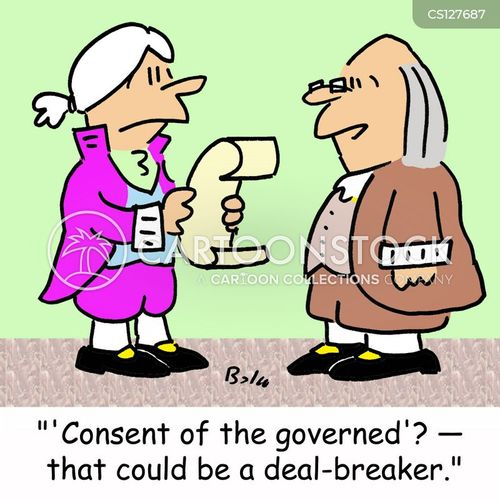
But a sensible term of, say, four to six years must always come with the possibility of recall by an unsatisfied electorate. And just as governors are subject to recall petitions in many states, the President of the U.S. must be removable, other than via impeachment. Trollope explains why:

We know that he can be impeached by the Representatives and expelled from his office by the verdict of the Senate; but this in fact does not amount to much. Responsibility of this nature is doubtless very necessary, and prevents ebullitions of tyranny such as those in which a sultan or an emperor may indulge; but it is not that responsibility which especially recommends itself to the minds of free men. So much of responsibility they take as a matter of course, as they do the air which they breathe. It would be nothing to us to know that Lord Palmerston could be impeached for robbing the treasury, or Lord Russell punished for selling us to Austria…. We are anxious to know, not in what way they may be impeached and beheaded for great crimes, but by what method they may be kept constantly straight in small matters… [T]hey must be…of one mind with the public. Let them be that; or if not they, then with as little delay as may be, some others in their place. That with us is the meaning of ministerial responsibility. To that responsibility all the cabinet is subject. But in the government of the United States there is no such responsibility. The President is placed at the head of the executive for four years, and while he there remains no man can question him… There are no reins, constitutional or unconstitutional, by which he can be restrained. He can absolutely repudiate a majority of both Houses, and refuse the passage of any act of Congress even though supported by those majorities. He can retain the services of ministers distasteful to the whole country. He can place his own myrmidons at the head of the army and navy, or can himself take the command immediately on his own shoulders. All this he can do, and there is no one that can question him. (1862, Vol. 2, Ch. 10)

And, Trollope adds with disdain, “Seeing that Mr. Buchanan has escaped any punishment for maladministration, no President need fear the anger of the people.” It is just such considerations as Trollope puts so well here that ought to make obvious that in Presidential systems too, a praiseworthy democracy requires the ability to recall all elected officials with terms greater than two years. State recall provisions vary, but I would recommend that a total of certified signatures equaling perhaps 25% of the number of voters in the last election for the office in question should be required to put the question on the ballot. A majority of those voting for recall in the recall election would prevail, but only if some minimum percentage of the electorate participates, perhaps 90% of the total number of those who voted in the election that put the individual in office. While such elections are indeed costly in many ways, democracy seems to me to require that recall of these officials be allowable at least once in any two-year period. Where any recall election is successful, a new election must be held as soon as possible.

Judicial “Independence” and “Separation of Powers”

It is interesting to note to what almost incredible extent the 18th Century constitution-builders in America amplified Montesquieu’s “separation of powers” trope into a principle that could be used to fuel the fear of any scent of “despotism.”[1] I will be discussing this matter in relation to bicameralism and the executive veto shortly, but it is important at present to distinguish what any parliamentary system shows to be largely a red herring, from the separate, and I think defensible, tenet of judicial independence. This matter is important here because the precept of independence must be made to harmonize with democratic principles when considering the selection of judges and the prospect of the revisability of their decisions by the people. Obviously, judges—particularly those who will sit on the highest courts—must have a specific sort of expertise. While this may be true of legislators as well, judges are not correctly viewed as our representatives. Where legislators will be chosen largely because of the concord between the voters’ views and what the candidates say they intend to do, judges—while also having political perspectives—clearly need to have legal expertise of a type that the electorate is unlikely to be in a position to assess. {And, unlike elected officials, they should not be subject to recall.} But...if, as I think, high judges must ...be selected by the executive, the legislature, or both, there should be no imputation of “separation of powers” here. Such “independence” as is required must be consistent with a judiciary that will remain responsive to the general will. As Paine pointed out, the distinction of government into Executive, Legislative and Judicial branches is more a distinction of words than of things.

The sort of responsiveness needed, even among the judiciary, seems impossible where judges are elected for life terms. And as Croly 1914 warns, a too-powerful judiciary makes us a nation not of laws but of lawyer-sovereignty—a country ruled almost entirely by unaccountable attorneys.[2] Selection of judges by the executive and confirmation by the legislature thus seem to me appropriate, but only if appointments are for fixed (perhaps) 12-year, though renewable, terms. Those judges wanting to remain on their benches at the end of their terms should be required to apply for continued service to the executive, who could either agree or dismiss them and make alternative choices, with such decisions again being subject to confirmation by the legislature.[3]

Judicial independence is, of course, more than a matter of selection and retention or dismissal of judges. There must be reasonable confidence, not only among members of the judiciary, but among contesting parties, that decisions will be made based on the merits of cases, rather than political considerations or estimates regarding whether some decision may be overturned by an executive or legislative edict—or even by the results of a popular plebiscite. But such judicial power must nevertheless not be itself used to entirely upend the will of the people. As Amy Gutmann 1993 points out, judicial review of legislative acts must go no farther than delegation of popular control, and not move on to the complete alienation of it.

There has been no end of disputes about this issue, not only in academic works, and in legislatures and courthouses around the country, but on battlefields of the Civil War. There are today numerous subjects where one can find the demos on one side and the courts on another. Gun control is a good example. But thorny as they are, I believe these issues are resolvable if we correctly distinguish among types of cases. State legislatures and executives have long been jealous of what they take to be the rights of their constituents to live as they please, and they have been quite willing to set aside criminal and civil cases and focus their objections to judicial power on those specific matters wherein a Federal judge strikes down or preempts a state law or constitutional provision based on an interpretation of the (U.S.) Constitution or a Federal law.[4] The distinction the states have tried to make here is on the right track but insufficiently careful. Justice Marshall was right concerning some matters. There ought not to be “second-guessing” of the Federal government or its high court by a state {or other litigant.} There must be a final say regarding what is the foundation (or at least the current basic structural law) of any nation, and, since elections are not truth-tracking, voters should not be used to weigh evidence or re-try cases. Neither, however, should the Federal courts be substituting their judgments for what the people...want..... Thus, it seems to me that there are some court decisions {or better: some aspects of all decisions} that ought to be reversible by popular vote.... 

Disgusted about the regular striking down by various courts of popular legislation involving such matters as child labor, workers’ compensation, and sanitary conditions in tenements, Theodore Roosevelt wrote,

It is the people, and not the judges, who are entitled to say what their constitution means, for the constitution is theirs, it belongs to them and not to their servants in office—any other theory is incompatible with the foundational principles of our government. If we, the people, choose to protect tenement-house dwellers in their homes, or women in sweat-shops and factories, or wage-earners in dangerous and unhealthy trades, or if we, the people, choose to define and regulate the conditions of corporate activity, it is for us, and not for our servants, to decide on the course we deem wise to follow. We cannot take any other position without admitting that we are less fit for self-government than the people of England, of Canada, of France, who possess and exercise this very power. (Roosevelt 1912)

Roosevelt’s solution was not to move to a parliamentary system, but to require that a certain subclass of judicial decisions be subject to overturn by votes for reversal. He wanted the courts to be independent, but believed that such independence was more at risk from corporate and legal special interest groups than it was from “popular tyranny.” He gives some minimum deliberative requirements for these actions (e.g., the plebiscite would have to wait at least two years from the election of the legislature that enacted the law that was struck down), but he isn’t quite clear on how to interpret the results of these votes. He writes, “It is a matter of mere terminology whether this is called a method of ‘construing’ or ‘applying’ the constitution, or ‘a quicker method of getting the constitution amended’” (1912). This is glib, I think: it is important for any democratic populace to be able to know what is in its constitution(s). Roosevelt was wrong to suggest that this doesn’t matter, but the difficulty he points up with his remark is not easily handled. Both the constitutions and the statutes of all the various states involve specific methods for amendment, and they may not include language regarding “amendment via court decision” due to alleged unconstitutionality. Let me here provide my own tentative suggestion for the availability of reversal votes...

{I omit much of what I proposed here because I now think I was mistaken to try to categorize decisions as reversible or non-reversible based on the subject matter of the case at issue. What I now believe should be outside the citizenry's purview is any effect on the litigants who brought the case on which the disputed opinion arose. So, for example, if the new Presidential Immunity decision were to be reversed  (as I believe it should be), such reversal should not subject former President Trump to prosecution for any prior "official acts," but would apply to every President (including him) subsequently. In other words, it's not the subject of the case, but the extent of its applicability that matters here. The principle of non-retroactivity must be maintained for the rule of law to remain intact. But I think the following proposed phraseology from my book is still relevant.} 

A vote to overturn a decision of any court...shall be construed as a remand to the court issuing the decision as well as to the [relevant] legislature and executive. Such remand shall include instructions that either (i) the court revise its view of the conflict within some specified period of time; (ii) (a) the court advise the relevant legislature regarding how to draft [a law] producing substantially the same result... and (b) the legislature and executive enact this statute within the same specified period; or (iii) the court provide constitutional amendments that would, in the unanimous opinion of the judges, handle [any alleged conflicts] and request that such amendments be placed on the [appropriate ballot(s] forthwith. Said instructions must be clear that if, by the date specified within them, there is in effect neither a policy tantamount to that desired by the voters nor an amendment to the constitution on the ballot that would allow such policy in the opinion of that court, then each member of the court who voted that the legislation be struck down as unconstitutional be forthwith removed from his or her office for cause, unless either two-thirds of the legislature in question indicate by open vote that they are opposed both to enactment of any such legislation or constitutional amendment, or the executive of that government agrees that it is his or her own responsibility that no bill has been enacted and no constitutional amendment has been placed on the ballot.

It is quite likely that others can come up with a less convoluted procedure, but the reasons for at least some complexity should be clear.[5] The judges may have been quite right that [a] new law conflicts with one or more constitutional provisions; the legislature might pass new laws according to the judicial recommendations and have them vetoed, or the executive might receive nothing to sign that would address the matter. It therefore may be hard to find duplicity or, if it is found, it may be difficult to parse it. But what should not be lost in these weeds is the necessity, as Roosevelt, Croly, Beard and a number of other progressives understood, that some method must always be available for the people to get what they want. In a democratic country, citizens cannot be left, as the American people are today, with so little recourse to change things, to have their way.

The Referendum

I have not spoken highly of the initiative petition, instead taking an attitude that may make my views seem undemocratic.[6] It is my view, however, that considerable expertise and diligent study are necessary to make good laws, and that those achievements are not generally dispersed throughout a broad populace. Furthermore, the initiative is, as already indicated, highly manipulable. But the referendum, which enables only the striking down of statutes or executive orders the electorate does not like, is markedly different, and, within strictly demarcated areas, must be available. Surely, on such matters as whether a country should go to war, the population at large must not be relegated to the position of ineffectual boosters or protesters. It is generally fairly easy for people to know that they don’t want this or that thing that has been thrust upon them. I believe the mechanism for overturn of a law should be similar to that suggested above for the recall of an elected official: there should be minimum numbers set for both signatures and Yea votes. And the demand for substitute action by the legislature or executive (though not instructions regarding precisely what it must be, which would turn the event into an initiative) could be required. The point is that spontaneous actions by legislators and executives must be subject to repeal by referendum—as long as the issues do not involve matters that are fundamental to democratic principles....

The voters know better than anybody else can what they want and don’t want. Their representatives are expected to be able to go some way in figuring out what to do with that information. But neither the voters nor their representatives may know whether such actions will be “good for the people.” That matter calls for special sorts of scientific expertise, as it is a function of what various courses of action can be expected to produce in terms of future attractive options and successful choices. Neither the general populace nor their representatives ought to be expected to be extremely proficient in that area of prognostication. It is not always easy to disentangle the wants both from the ways and from the expected and actual values of the results: there will be overlaps, gaps and disagreements.[7] But democracy should allow us to do the best we can. The availability of referendums ensures that neither representatives nor experts appointed by legislatures or executives can usurp the basic democratic right of the people to indicate what they don’t want—and have what is unacceptable removed where possible.

As noted above, it is reasonable to be concerned that a “majority veto” by the electorate at large could cost minorities gains that they might make in legislatures through logrolling or strategic contributions, because, while intensities matter in deliberative bodies, they do not play where we simply count heads.[8] But while a distilled populism intentionally ensures equal {treatment, protection, and even more than than equality suggests with respect to} voice to minorities, it should not be expected to provide strategies to achieve minority rule. The people at large must be convinced {of all matters not involving democratic principles}. Of course, it is not always possible to know that our representatives actually approve of some action or do so in light of their general agreement with us on the issues: it may be that they are lying or have been bought. Vigilance is crucial in the area of public corruption, and the opportunity and means to cure illegitimate encroachments must be in the voters’ arsenal. In a word, the Progressives of Teddy Roosevelt’s time were right about the gradual usurpation of the people’s power, even if their proposals need tweaking. Confusions and conflations (as well as the intentional smokescreens sent up by traditional liberals and conservatives) have managed to deprive U.S. citizens of real democracy since the country’s creation. Yes, equal protections must never be violated. Yes, the judiciary must be independent {with respect to certain matters}. No, we cannot allow tyranny—even by the people. But it is possible to have real democracy for all that.


Footnotes

[1] An excellent discussion of this metamorphosis can be found in Gordon Wood 1969. It is fascinating to discover that at the time of to the signing of the Articles of Confederation, many of the individual states were extremely democratic, providing limited terms for judges, broad impeachment processes, little in the way of executive vetoes of legislative actions. As J. Allen Smith (1907, Ch. 2) notes, “In this respect the early state constitutions anticipated much of the later development of the English government itself.” Smith attributed this radicalism to the fact that the checks and balances in the English system and in the colonies first established in America “resulted from the composite character of the English Constitution—its mixture of monarchy, aristocracy, and democracy.” When the democratic spirit grew in the new world, there (at first) seemed little reason to retain all the restraining mechanisms. And so the Articles, like the state constitutions, entirely omitted them.

[2] “No reverence for the law can guarantee political and social liberty to a body of democrats who confide their collective destiny to written formulas as expounded by a ruling body of lawyers. In practice each of these systems develops into a method of class government. The men to whom the enormous power is delegated will use it, in part at least, to perpetuate the system which is so beneficial to themselves.” (Croly 1914, 279) See also the careful demonstration of the unavoidable defects of judicial lawmaking and the consequent importance of legislative codification in Austin (1869 Lect. XXXIX).

[3] Dismissals and appointments should be considered separate actions, since the legislature ought to be able to overturn a dismissal, perhaps by a 3/5 vote as if it were a veto. Since I have criticized the use of super-majorities above, I should note here that I have no problem with them when they are used exclusively to overturn contrary (simple majority) actions by another legislative branch or the acts of an executive elected by the same (or roughly the same) electorate.

[4] See, e.g., Ransom 1912, Culp, 1929, and Beard, 1912.  This issue was a stalking horse for Teddy Roosevelt during his Progressive period.

[5] A simpler, if less radical approach, according to which legislatures may overturn certain types of judicial decisions has recently been suggested by Ganesh Sitaraman 2019.

[6] As already indicated, that is the response that I’d expect to be taken by Nadia Urbinati, given what she says in Democracy Disfigured. (Urbinati 2014) For a more favorable view of strictly “yes/no” plebiscitary arrangements, see Jeffrey Edward Green 2011. My own view, like Croly’s, falls somewhere in between.

[7] Urbinati 2014 is instructive on the nuances of what she calls the “diarchy” of decisions and opinions.

[8] See, e.g., Clark 1998.

****************

You will remember of course, that I said at the outset of this post that changes of the sort I seek are all but impossible. Simply hopeless. Matters are just too dire. I believe, nevertheless, that it is good to know what one ought to strive for. Philosopher Mark Norris Lance reminded me the other day of this particularly fitting (and moving) quotation: 

“I wish it need not have happened in my time,” said Frodo.
“So do I,” said Gandalf, “and so do all who live to see such times. But that is not for them to decide. All we have to decide is what to do with the time that is given us.”

Wednesday, July 3, 2024

First Brief Comment on the Immunity Decision (the Rebuttable Presumption Theory)


All of you will of course have read or heard by now that the Supreme Court, has by a 6-3 majority, recently distinguished two sorts of "official acts" a U.S. President may engage in: those that are explicitly reserved for our nation's chief executive by language within the Constitution (or are at least implied by this Court's extremely robust theory of the separation of powers), and those that are not dispositively out of prosecutorial range, but are nevertheless related somehow to the President's explicitly enumerated Constitutional responsibilities--even if only peripherally. 

What has been frequently written, broadcast and posted about what the Court said about this division of Presidential activities is that the first group must have "absolute immunity" from prosecution, while the second group is afforded only a presumption of immunity, one that may be rebutted by prosecutors at trial. 

That isn't quite right, though.

Here's what the Roberts decision actually says about this matter:

"We conclude that under our constitutional structure of separated powers, the nature of Presidential power requires that a former President have some immunity from criminal prosecution for official acts during his tenure in office. At least with respect to the President’s exercise of his core constitutional powers, this immunity must be absolute. As for his remaining official actions, he is also entitled to immunity. At the current stage of proceedings in this case, however, we need not and do not decide whether that immunity must be absolute, or instead whether a presumptive immunity is sufficient."

"The indictment’s allegations that Trump attempted to pressure the Vice President to take particular acts in connection with his role at the certification proceeding thus involve official conduct, and Trump is at least presumptively immune from prosecution for such conduct."


"[W]e conclude that the separation of powers principles explicated in our precedent necessitate at least a presumptive immunity from criminal prosecution for a President’s acts within the outer perimeter of his official responsibility."


"At a minimum, the President must...be immune from prosecution for an official act unless the Government can show that applying a criminal prohibition to that act would pose no dangers of intrusion on the authority and functions of the Executive Branch."


"The President...therefore may not be prosecuted for exercising his core constitutional powers, and he is entitled, at a minimum, to a presumptive immunity from prosecution for all his official acts."


As you see, no fewer than five times did the Court quite clearly indicate that there is at least or at a minimum a rebuttable presumption of immunity for any ex-President who is accused of violating a criminal law for any even marginally "official" act taken while President. It thus seems to me quite obvious that the Roberts Court has given an unmistakable warning that (assuming Trump does not win the election and make this whole business go away forever) if a lower court were to hold that a presumption of Trump's immunity from prosecution were effectively rebutted by the prosecution in the case of his attempted coup or fraudulent elector scheme, it would be perfectly consistent for SCOTUS subsequently to decide on appeal that having a rebuttable presumption of immunity just turns out to be insufficient to afford certain Presidents who may want to take bribes or effect coups or overturn elections the certainty of stress-free retirements. For, as they repeatedly told us, we don't want our Presidents to be afraid to be bold!


So, contrary to a lot of reports about this decision, Roberts and his colleagues have made it crystal clear that granting Trump something better than a mere rebuttable presumption of immunity is precisely what we should expect in the unlikely event that this case somehow continues to survive its long swirl around the drain for another trip to the immense heights of the Supreme Court of the United States, our absolute guarantors of equal justice for all.

Tuesday, June 18, 2024

Why I Stay Under My Bed


I've never done anything like this before, but this Sidney Blumenthal piece in The Guardian is so good, and captures what's ruining any chance for anything resembling democracy in the U.S. to occur in the near future so well, that I can't resist putting a link to it here. 


If you're reading this, you know that I mostly write about democratic theory. But any sort of democracy--even the quite skimpy version available in the U.S. since it's earliest days--requires at least a modicum of sanity and a dollop of self-worth among the electorate. Those elements don't seem to be available in sufficient amounts in one of our two major parties at present to support elections.


To understand, what I mean, one really should read this. Sadly, it seems that sometimes you just have to say out loud, "Theory, Shmeory."


Saturday, May 25, 2024

I Try to Review Elgar Publishing's New (and Encyclopedic) "Handbook" on Populism


My background is in philosophy, meaning that I'm not trained in any empirical science, social or otherwise. Neither can I properly be called a successful auto-didact in any scientific area--in spite of my long-term interests in psychology and political science. Arguably, I am insufficiently sedulous, or maybe just too capricious--to have studied those subjects in the careful, methodical manner required to earn that designation. 

In addition to those flaws, maybe as a result of reading so many great works by philosophical and literary giants over the years, I have come to be drawn to writings that seem (to me, anyhow) to be of lasting value. But the desire to be widely read for philosophical elucidation and/or aesthetic pleasure 100 years from now cannot have been among the goals of the editors or publisher here. A snapshot of the current state of research is simply not that sort of work. 

In view of my multiple disqualifications, I am probably not the best choice to review Elgar's new Research Handbook on Populism, (edited by Yannis Stavrakakis and Giorgos Katsambekis). Nevertheless, I gave that task a shot. And, to be honest, I did learn a few things about both populism and social science research methodologies that I did not know before. But to be even more candid, I will admit to not being entirely sure it was worth the (fairly considerable) time and effort it took for me to absorb even those small portions of this giant tome that I did manage to plow through. 

Anyhow, I hope the publisher, editors. and authors will take my review with a grain of salt, and chalk up the criticisms therein to Horn being an old dilettante who should stick to Hobbes, Hall, Hart, Huxley, and Haack (and if he absolutely MUST be allowed to muse out loud about some non-H-surnamed thinker, maybe Trollope or the Buddha), and stay the hell out of the way of scholars who are either conducting or writing about actual SCIENTIFIC RESEARCH!

Incidentally, just the other day, I received the (extremely generous, given the cost of these books) offer from Elgar Publishing to also review their next Research Handbook: this one on authoritarianism! Perhaps strangely, I was a little bit tempted. But I'm pretty sure we'll both be happier if I take a pass this time. 


Thursday, April 25, 2024

A Break From Democracy Articles With Some Democratic Music


While I slowly slog through Edward Elgar Publishing's new and massive Research Handbook on Populism, which will be the subject of my next review and also work on a few revisions to a paper on epistemic democracy I recently completed, I thought a few of my readers here (two or three maybe?) might like to hear some new freely improvised music from--as anyone can easily tell from the picture above--Framed Ophelia (though obviously not the pre-Raphaelite version). You can listen free at Bandcamp

If, as I suspect, a couple of quick, easy-to-swallow excerpts is way more than enough for most democracy researchers, I recommend tasting "Robot Beat Poets" and "Swarm Intelligence"--maybe topped off with "A Brief Dilemma."  (Yoshi can be soooo lyrical.) 

FWIW, I insist that, while these recordings represent neither left- nor right-wing populism, they do kind of symbolize authentic, radical democracy--even if of a kind that is sometimes a bit undistilled for my liking. That's life, I guess.

Here's a bit more, for those with an interest in the solemnity of Graduation Days:

Back soon with the regular (more boring? less annoying?) stuff. 

Cheers.

Thursday, April 18, 2024

Are There Any Important New Books on Democracy That are Fun to Read?


After writing what seems like a hundred reviews of contemporary books on democratic theory, my own (likely idiosyncratic) view about the current lit is that the best stuff written this century so far is by Roslyn Fuller. She has three recent books on the subject (and I understand is about to start a fourth). I have just completed a review of one of them: Defence of DemocracyI here provide the last three sentences as a bit of a teaser/trailer. 

This is a terrific work that would be important for its informative discussion of Athenian democracy alone. It’s not only fun to read and convincing, but the issues it addresses are of the highest importance. In fact, it’s my view that Fuller is the heir apparent to Robert Dahl, and that she is currently producing the most valuable and readable contributions to political theory that anyone is likely to find anywhere. Highly recommended.


[NB: The picture above is of the book's author!]


Friday, March 8, 2024

Can "Wasted Vote" Really Mean All These Things?


Those who have hung around "voting reform" advocates for any period of time will have surely heard nearly every group brag that the particular procedure they are pushing has the most wondrous merit of reducing (maybe even eliminating!) wasted votes. This is claimed to be a big deal because the wasting of votes exhibited by the most common voting method around the world, First-Past-The-Post (or "FPTP," the procedure where a bunch of people or things run against each other, and whichever person or thing gets the most votes wins) is said to be particularly profligate.  Lots and lots of votes are claimed to be wasted with FPTP. Maybe all of those cast for losers; even, maybe, a lot of those cast for the winner too if he, she, or it won by a landslide!

 One of the great virtues often claimed for non-FPTP voting methods is that each (brilliant) procedure being proposed is said to cut down tremendously on FPTP vote wastage, which, to its eternal disgrace, rivals that of the tonnage of food still thrown away by wealthy nations--even in our era of widespread inexpensive refrigeration.

A problem with this brag is that there are several widely diverging understandings of just what a wasted vote is. The old-fashioned and perhaps still the most common understanding, one that elicited several papers in the scholarly press in the 70s and 80s to the effect that no vote is ever entirely wasted (and the one with which Ralph Nader and other third party supporters have to deal pretty regularly) is this:

(1) A wasted vote is any vote cast for a candidate or question that has no legitimate chance of winning the election in which the vote is cast.

It's easy to see why people have claimed that this definition is vague, and that rather than being clarified, it should just be dropped altogether. First, what's a "legitimate chance"? Furthermore, people vote for lots of reasons besides obtaining a winner, and many will deny that a vote they have made as a protest or to improve a party's future or just to piss off a neighbor has been "wasted." But whether or not (1) is a good definition, it may well still be the most common understanding around. And there's little doubt that the fighting over whether somebody has or hasn't absolutely wrecked everything by wasting their vote (as so understood) is likely to continue.

Perhaps because Definition (1) has caused so much ill-will over the years, a newer and arguably less contentious one has gained prominence. If one looks up "wasted vote" in Wikipedia (as, of course, anyone with a question about anything always does these days), one will find this new, (and maybe improved?) version

"In electoral systems, a wasted vote is any vote that does not receive representation in the final election outcome."

Of course, one might ask, just which votes in an election do "receive representation"? Always happy to help, the Wiki author(s) of this entry have supplied the following answer: 

There are two different types of wasted votes:

  • Excess votes are votes that a candidate receives above and beyond what was needed.
  • Lost votes are votes that were not enough to make an impact by winning a seat.

Sometimes the term "wasted vote" is used by those referring only to "lost votes," while others use the term to refer to the sum of the lost votes and the excess votes.

Here, it seems, is where the idea comes from that lots (maybe almost all!) votes are wasted in nearly every election, regardless of the sort of procedure being used. I'll put the definition this way:

(2) A wasted vote is any vote that was not needed for the winning candidate or question to have won. If the person who cast such a vote had stayed home, it would have made no difference to to the eventual results.

I must say that, whether or not (2) is less contentious and/or ambiguous than (1), I have no idea what it means. I take it that in a FPTP election, it takes only one vote more than those cast for anybody or anything else to make a winner. So, under this definition, only one vote in any election having a winner will be unwasted. But...which one? Who knows?

It is quite possible that the weirdness of both (1) and (2) has played a significant role in leading to the creation of a third version that can be found around the voting method advocacy water bubblers. FairVote, a large organization pushing Ranked Choice as the way to go defines "wasted votes" as follows:

Wasted votes occur when a candidate's name appears on the ballot after they have dropped out of the race. Early and mail-in voters often fill out ballots a week or more ahead of Election Day, before they know which candidates will be active when their state holds its primary.

While I haven't exactly searched high and low regarding this matter, if I'm honest, I have the sneaking suspicion that FairVote might like this extremely restrictive definition of what a wasted vote is because if you use it, ranked choice looks good. I'm not entirely making this up, incidentally: I get it from this additional remark of theirs:

Early voting isn't the problem; our "choose one" voting method is to blame for wasted votes. Ranked choice voting ensures every vote is counted, and every voice is heard when choosing presidential nominees. It empowers voters....If their favorite candidate has dropped out, their ballots are still valid.

Certainly, if "wasted votes" mean what FairVote says it does, we can presume that any system that allows you to vote for a bunch of candidates (this would include Approval Voting too, btw) is much less likely to produce waste. In any case, here is my rendering of this definition:

(3) A wasted vote is any vote cast for a person who is on a ballot in spite of dropping out of that race prior to Election Day.

This one has the virtue of being clear and understandable, but even if its sole purpose was not to make ranked choice look good compared to its most popular competitor, nobody prior to this FairVote concoction (and nobody else since as far as I know), has ever put forward such a restrictive understanding of what it is to waste a vote. I mean, it's one way for sure but....aren't there many others?

My point in all this is just to suggest that the next time you use the term "wasted vote," maybe think about what you mean by it. Is it one of the three concepts described above? Something else? And the next time you hear anybody else use it, maybe ask them what they mean. 


Alternatively, maybe switch to "squander"! Because it's now election season here in the U.S.A., folks, and it may be the last time we get to freely squander anything!  Fare thee well, my poor fellow Americans! {As you can see, I've rolled back under my bed now.} 

Wednesday, February 28, 2024

Is Picking Representatives by Lottery More Democratic Than Electing Them?


There is widespread agreement these days that elections aren't working very well for the people of supposedly democratic polities around the world. There's a lot of blame to go around and plenty of suspects to nail it on: Parties, Single-Winner Districts, First-Past-The-Post Majoritarianism, Special Interests, Incumbency Stickiness, Campaign Finance Shortcomings, Endless Campaigns, Polarization, Vote Splitting, Referendums, Lack of Referendums, Anti-Majoritarian Federalism, Recall Perils, Lack of Recall Availability, Etc., Etc., Etc. As a result of all these flaws, it has seemed for some time that electoral politics is a waste of time and money--at least for regular folks.

It's unsurprising, then, that there has been a big renewed interest in doing things the way the Ancient Athenians (sometimes) did them. The Occupy Wall Street movement notwithstanding, most modern countries--and even their major political subdivisions--seem much too big to have all of the legislative, executive and judicial obligations of government handled exclusively by the entire mass of citizens anywhere, but the idea of picking representatives by lot has made a huge comeback. After all, if that single (though radical) change were made, a lot of the problems mentioned above could simply be scratched off the list.

And it isn't just political scientists and historians who have been pushing this change* advocates have found their way into popular media as well. A tiny selection of the organs that have included positive pieces on the idea recently include: Vox, Irish Times, Bloomberg, Boston Review, NJ.Com, San Diego Union-Tribune, Aeon, The Boston Globe and India Today. There are many other examples that could be given.

So, does the ancient past give us the best solution to our current political morass? I take up that question in my new review of David Van Reybrouck's book, Against Elections: The Case for Democracy, here.

_________________

* Although there definitely are a bunch of recent books on the subject. You can find a batch of them listed here. (One quite engaging book on the alleged superiority of Athenian democracy not mentioned there is Roslyn Fuller's Beasts and Gods.)

Thursday, January 18, 2024

Fugitive Thoughts on the SEP entry on Democracy


1    I am a big fan of the Stanford Encyclopedia of Philosophy. I have learned a lot from it over the years and am generally very impressed by the quality of the content. 

   I do have some problems with the article on Democracy, though. This, of course, is quite likely the result of my being more familiar with the matters discussed in that piece than I am with most of the others I have come across. After all, I’ve spent the last decade of my life reading and thinking about those issues. I do think, though, that, independent of my own background and interests, this particular article is somewhat more slapdash than others I have seen. (Just to give one random example of the latter, I recently read a great entry on Spinoza’s political philosophy, and, even though I did my Ph.D. thesis on Spinoza, I learned quite a bit from it.) And I want to stress that my admiration for SEP has been there whether or not I have generally agreed with the author(s) on specific subjects included in their entries. In my experience, the articles there have nearly always provided fine overviews of the most important controversies in philosophy—old and new. Furthermore, most of the articles can be read with immense benefit by both interested laypeople and experts in the field. In my opinion, it's simply an incomparable resource.

  I also want to mention right off the bat (to any  suspicious readers in these parts) that I have nothing against the lead author of the article on Democracy or the positions he takes on most of the related issues. (And I promise that I am not looking for citations to my own work, most of which has been published in pretty obscure journals and one widely unread book.) While I have never met or corresponded with Tom Christiano, I have read some of the (excellent) stuff he has written on a number of the topics covered in this article, and I think his book on what he calls “public equality” is surely the most important work anybody is likely to find on that subject. So, while I do think the article probably follows his Constitution of Equality a bit too closely, I also think that book is quite good and that people interested in democratic theory could do a lot worse than making it the cornerstone of their study.


4   OK, my critique. One thing that is likely to be noticed right off the bat when looking at the “Democracy” entry at SEP, is that, with the exception of Locke, there is not much discussion of the major figures in the history of democratic theory. Plato, Hobbes, Mill and Rousseau do get a couple of mentions each as the article proceeds, but none of their views are considered in detail, and a number of key thinkers and works are entirely ignored. Furthermore, the development of the concept of democracy through history is largely passed over. Most scholars agree that democracy's roots go back to ancient Athens, but there’s no mention of Athenian versions here. Moving forward a bit, one book that I think should not have been missed is Marsilius of Padua’s extremely important 13th Century work, Defender of the Peace. (I note, in passing, that there is no separate SEP article on Marsilius, which I think is something that really ought to be remedied, whatever may or may not be done with the Democracy entry.) In his book, Marsilius not only devotes a lot of space to touting the benefits of democracy over monarchy and aristocracy, but also spends hundreds of pages discussing the importance of separating Church and State and arguing that all earthly power should be given to State—so long as it is a majoritarian jurisdiction. His opposition to Papal powers was quite vehement! 

     Of course, authors of articles of this sort will always have to leave out this or that scholar and may need to decide generally whether they want their pieces to be focused on history or contemporary debates. But it was surprising to me that, while the usual large array of contemporary works are cited, it isn't only the Athenians and Marsilius who are omitted. There is, e.g., no Jefferson, Madison, Tocqueville, Bryce, Kelsen, Lindsay, or Schmitt. There's also not a single word on the concept of federalism and the difficult problems it poses for majoritarianism. Clearly, a conscious decision was made not to focus too much on history, so more space would be left for discussion of contemporary debates. But when the best substantive arguments are also to be found among “the greats,” as I think is sometimes the case here, it’s not clear that readers benefit by such omissions on the substance front either. (I should say again, though, that Locke is an exception to the practice here: there's quite a bit of material on his views.)

     The idea of consent pops up here and there, mostly in connection with whether individuals have an obligation to abide by governmental edicts, but there’s not, as one might expect, a section devoted to the traditional idea that democracy is, more or less, an elaboration of what follows from the concept of consenting group members. “Majority tyranny” (a particular peeve of mine, see this paper) is referred to a few times, but is nowhere defined or even explained. We read that it should be distinguished from the problem of persistent minorities because where the latter is found, "it may be the case that the majority attempts to treat the minority well, in accordance with its conception of good treatment." It would seem to follow from that way of looking at things, however, that majority tyrannies, unlike many jurisdictions in which we find persistent minorities, cannot not treat minorities in accordance with their conception of good treatment. But that is an odd suggestion, since it seems clear that we can imagine tyrannical majorities that consistently believe they are treating all of their citizens very nicely.

5   The authors tell us at the outset that they want to engage in normative, rather than descriptive theory. Their interest is in “the moral foundations of democracy and democratic institutions, as well as the moral duties of democratic representatives and citizens.” I will come back to this choice to focus discussion on moral matters, but first I want to look into what they claim to mean by “democracy” throughout the piece. The authors here indicate that by this term they mean (a) in all and only democracies, group decisions are made collectively and are binding on all group members; and (b) the decision-makers must be considered equal in some more or less “thick” sense. That is, maybe all their votes in general elections should be equally weighted, or maybe they each should get some equal (and significant) time and/or vote strength in the business of actually making laws—not just voting for representatives: but there must be some sense in which each citizen is considered equal to every other citizen. They also note that they don’t want their definition to require that democracy is a good thing; they require that it be compatible with some other form(s) of government being preferable.


  When we consider the aptness of this definition, it's important to understand that democracy is often distinguished from monarchy, oligarchy, and aristocracy. (Marsilius and Hobbes make these distinctions in detail, e.g.). But such comparisons might not make sense if democracy is defined at the outset as a decision-making procedure. After all, it wasn’t generally suggested back when the relative merits of those sorts of governments were being regularly and seriously assessed, that in monarchies only the monarch can vote; in aristocracies, only elites can vote, etc. On the contrary, what was being compared was RULE by monarchs, by elites, by the demos, etc. Now, I want to stress here that I absolutely agree that something like what is settled on by the SEP authors is how democracy should be understood. My objection is that I think this must be demonstrated: it can’t be simply assumed without immediately begging questions against those who support things like sortition (picking representatives by lot) or even, arguably, such proposals as term limits. For making democracy a selection method immediately and without any argument at all turns sortitionists and term-limit advocates into anti-democrats. Again, I myself think they are anti-democratic, but I don’t believe it’s right to shove them into that camp without argument.

 Consider the fact that sortitionists generally argue that random choices of rulers from the electorate is more democratic than picking rulers by plebiscite. Why? Because they think such a method will produce a government that is much more similar (say in class or race) to the citizenry at large than selecting representatives by election will. Any such claim will be immediately foreclosed without argument if one simply starts with a definition according to which democracy is made solely a matter of how governors are selected. While I repeat that I do think this is where one needs to land, I concede that it is not the traditional understanding (say by the Athenians or Hobbes) of “democracy,” and recognize that picking a different definition without argument is unfair to those who continue to approve of that understanding. (On the other hand, I believe what the SEP authors have provided here is a good initial definition of “majoritarianism.”) 

Interestingly, the authors write that “proposed justifications of democracy identify values or reasons that support democracy over alternative forms of decision-making, such as oligarchy or dictatorship,” but oligarchy, e.g., is most commonly defined as rule of a country by a small group of elites. Some would claim, reasonably, that it doesn’t matter at all how such a group is chosen. And it seems clear, particularly in today’s U.S., that a dictator could be elected by lots of methods the authors here would have to categorize as democratic. (One other thing I will mention is that, to the extent the discussion is focused on majoritarianism, as I think it mostly is in this article, I think space should have been given to such matters as the recall of public officials and fixed terms of office. There’s nothing at all on either subject.)

 As mentioned above, in a refreshing exception to the general neglect of historical figures, there is a discussion of Locke’s argument for majority rule. Unfortunately, it shines a light on the above-mentioned problem of a too-quick definition of democracy. The authors write, “Locke thinks that a people, which is formed by individuals who consent to be members, could choose a monarchy by means of majority rule and so this argument by itself does not give us an argument for democracy.” That, of course, is hard to square with a definition of democracy precisely as a decision procedure, something which would seem to be entirely consistent with rule by a monarch.


6   A very substantial percentage of this SEP article is devoted to epistemic justifications of democracy. The idea, as is nicely explained here, is that “democracy is generally more reliable than alternative methods at producing political decisions that are correct according to procedure-independent standards.” A lot of space is given to Condorcet’s Jury Theorem, and two other suggestions are given for democracy’s supposed superiority on the reliability front as well: “the effects of cognitive diversity” and “information gathering and sharing.” What is not discussed at all is what it is supposed to mean for a public policy decision to be “correct” in the first place. I, for one, think it would be entirely unsurprising for any electoral decision to be “correct” if a vote is (as I think it is) no more nor less than a matter of asking a person or group what they want.

 The lack of any discussion of what it means for a public policy to be correct seems to me to be a major defect of this article. It functions as an unargued assumption for some sort of objective list theory of well-being. And from there we can infer that it goes on to take votes to be inquires of a sort regarding what can be expected to produce the highest levels of group well-being. I think all of that is not only controversial, but simply wrong. For whatever it may be worth, much of my book is devoted to those matters.


 To see how important this is to current controversies in democratic theory, consider the following passage: 

[I]f we expect most people to engage in other difficult and complex tasks, how can we expect them to have the time and resources sufficient to devote themselves intelligently to politics?....[O]ne widely accepted estimate puts the odds of an individual casting the deciding vote in a United States presidential election at 1 in 100 million….Anthony Downs has argued that almost all of those who do vote have little reason to become informed about how best to vote. On the assumption that citizens reason and behave roughly according to the Downsian model, either the society must in fact be run by a relatively small group of people with minimal input from the rest or it will be very poorly run. 

 And such criticisms are said to support the Platonic idea that government by a race of wise and virtuous Guardians is superior to anything that democracy can offer. My point is that knowing what one wants doesn't seem particularly time consuming or difficult, so if that’s what’s actually expected of voters, it seems silly to suggest either that it’s a terribly imposing task or that some other expert(s) could do a better job.


7   I very much like the Christiano-based arguments against epistocracy found here, which are largely based on his original analysis of “public equality.” Again, I think this is a very interesting and important approach to political authority. But it does bring us back to the claim that normative assertions about democracy and governmental authority must be moral assertions. That claim may well be correct, and whether it is or not is certainly a thorny issue, but it’s another matter that I think requires argument, and none appears here. Another way of looking at whether we ought to have democracy and whether citizens ought to abide by democratically produced edicts—regardless of the sort of outcomes this style of government does or is deemed likely to produce, is to ignore morality in favor of an entirely different sort of value, the prudential sort. That is, we can leave the question of whether democracies are ethically preferable to other sorts of government arrangements, and instead consider only whether democracies are better for the populace. (And it’s important to recognize that such assessments may be made ex ante, as well as ex post, so every prudential value judgment need not be seen as an outcome assessment of resulting well-being. I talk about this issue a bit in a recent interview that can be found here.) 

      Again, in order to get an understanding of such judgments, one has to enter into questions about just what it is that makes--or is expected to make--a life go well (ex ante). And, as indicated above, that means getting into various theories of well-being. Is it a bunch of objective items, like, say, health, wealth, loving relationships, knowledge, etc. that makes everybody’s life better, (whether they know or agree with this list or not)? Or is well-being, as hedonists think, actually determined by the level of pleasure in some person’s or group’s life? Or is it, perhaps, a function of how many or what percentage of one’s desires get satisfied? In my work, I have argued that ex ante well-being is a matter of getting to freely choose what one wants. No doubt, I may be entirely wrong about this, but I don't think that’s  really relevant here. The main point is that where one comes down on the nature of well-being is likely to determine how one decides both the question of whether votes are likely to be “correct,” and whether democracy is a “good thing” or not. So, I don’t think one absolutely must take a position here on whether democracy is—or should be thought to be—morally good. Rather, it's possible to reasonably stick to the question of whether (and how one determines whether) democracy is good for persons or groups.

8    Now, independently of whether we decide democracy is generally (prudentially) good for a group of people, we may also wonder whether those who are in a democratic polity have a duty to obey appropriately passed laws. How one is likely to answer this, must, I suppose, be at least partially a function of where one stands on moral obligations generally. If one denies such obligations or is just skeptical about our knowledge of them, one may again turn to the (at least apparently) less mysterious questions involving whether one will generally be better off by obeying such laws. And this distinction may be relevant not only to any claimed duty to obey, but also to any ostensible duty to vote. (Indeed, it should be mentioned that the authors make even the question of “What sort of representative system is best?” a moral matter!)

  As indicated, in his book, Christiano has given what I consider an ingenious theory involving treatment of others to explain why such obedience makes us both morally better and better off. Unsurprisingly, he takes the same tack in this article as well. But, in any case, while the question of whether one ought to follow democratically derived laws certainly can be reasonably construed as a moral question, I again insist that it is not the only possible perspective here--even when one considers Christiano's own approach to the subject. And, in fact, much of the discussion of instrumental versus inherent reasons for claiming this or that with respect to democratic issues found in the SEP entry seems to me to confuse or conflate these matters to some degree because prudential and moral values are not carefully distinguished. I note here, e.g., that discussions of the merits of proportional representation would be considerably clarified by distinguishing the type of value being talked about. 

   On the other hand, I will concede that I’m not entirely sure myself whether or not to make civil obedience a moral matter. It is my view, e.g., that giving minorities appropriate voice (i.e., voice reflective of their numbers) in some sense ought to be done regardless of the outcomes generated by that approach. That is, it seems to me axiomatic or fundamental in some sense, just as the equality of persons (from which we derive majoritarianism in the first place) is axiomatic. That is, although I have no great arguments to give for these principles, I resist the claim that I need to have any if I am right that they are simply fundamental starting places--whether they are moral claims or not. To conclude, if these axioms are seen as moral claims, so be it, but whether or not that is actually the best way to look at this matter is simply not obvious to me.

9   There is some discussion here of the “all-affected” theory for determining which persons should be considered subject to a polity’s laws, and I entirely agree with the negative conclusions reached in the SEP article. In fact, in my view, any number of additional attacks might have been successfully leveled against that position. It just seems to me indefensible. I believe, however, that more could have been said here on behalf of a strictly geographical determination of who must comply, and generally, on such things as who should be allowed to vote considering matters of age, competence, and alleged moral depravity (or felony convictions). There’s a lot of good literature on this.

1   Moving on, the authors' discussion of Arrow’s theorem misses what I take to be an essential matter: whether the preferences in question are ordinal or cardinal. I won’t go into this here, but I devote a significant amount of space to it in my book. Those sorts of considerations (rightly or wrongly) result in my support for Approval Voting and the Single Non-Transferable Ballot. Whatever the value (if any) of my thoughts on the particulars of voting, my general sense is that this SEP article would be better without any discussion of them at all. Voting theory is pretty arcane, and I think technical matters of that type would probably have been better left to one or more separate articles put together by other experts (maybe from the world of political science). In any case, the material on voting theory here is pretty slim and skeletal, while the literature and number of controversies regarding such issues are mountainous and dense--as well as momentous in today’s political climate. I therefore think removing that material in its entirety would make space for more philosophy and history without much reduction in quality.

      In sum, fellow democracy researchers,