Monday, December 5, 2022

A Deeper Dive Into Choosing, Wanting and Getting


Not long ago I uploaded a piece here about the apparent tension between obtaining the goods of the world and what might be called an Eastern take on craving–any position according to which desires are essentially harmful to the desirer. However, as I mentioned in that entry, it is arguable that trying to conquer the natural tendency to want things in the world might itself be seen as just one more desire. This tension has sometimes been called “the paradox of desire.” In an interesting 1979 paper in Philosophy East and West, A.L. Herman provided what he termed a solution to this paradox of someone achieving a condition of desirelessness through desiring it. His way out was to suggest that desirelessness can be obtained not by wanting it, but by coming to understand that one cannot actually obtain it by wanting it. Instead, after the manner of a certain McCartney, one has to “let it be.”     


Before going into this matter in more detail, I probably should indicate again what this issue, which has mostly stayed within the boundaries of Buddhology, has to do with democratic theory. Unlike most (maybe all?) other normative democratic theories, I attempt in my book to derive electoral procedures from conclusions I reach regarding what makes states of affairs good for persons or groups. My inquiry into prudential value relies on an axiom according to which, for both individuals and polities, The More Good, The Better. The goods I settle on, based on a post-WWII suggestion by American value theorist Everett Hall, are successful free choices--even if they are imprudent choices in the long run. But if all successful choices are a breeding ground for future desires because craving is in reality always bad for the person doing it, this would seem to be a big problem for my theory. Furthermore, to be fair to my critics, an aspiration to live a certain way seems quite a distance from the sort of choice that could be part of the basis for public policy. Surely it can be argued that this association is largely metaphorical. So I will take this opportunity to investigate the issue further here.


One particularly engaging philosopher and Buddhologist, David Burton, has devoted a significant  portion of his work to the question of why so many Buddhist schools are focused on (i) the connection between craving and suffering (dukkha), (ii) exactly how appropriative desires (i.e., the bad type) might be thought to be the cause of unhappiness even when one gets what one wants, and (iii) what people must do to free themselves from what is taken to be the principal cause of human suffering. Burton centers his discussion of these issues on the Buddhist contention that all items in the universe–not just those resembling such things as garden rakes (or ideas of them), but things like persons and prime numbers–are fleeting and impermanent: little more than short-lived ghosts. The Buddhist theory regarding the consequence of omnipresent impermanence is intuitive: Why wouldn't an impermanent thing's desire for the lasting appropriation of some other impermanent thing--say, fame, fortune, sexual pleasure, physical health or a comfortable home life, cause unhappiness? Burton accepts this (arguably questionable empirical) conclusion and then considers how one might transcend such proclivities. He thinks one can do so only by reaching a deeper understanding of the claimed essential impermanence of absolutely everything. The idea is that if we really (REALLY) understand that nothing lasts, we will stop wanting to appropriate things in order to have them always with us. Given this picture, can happiness be found. And, contrary to any theory like mine that relies on the principle of The More Good, The Better, achieving well-being does not require the choosing of any "goods" at all.


Burton recognizes that he and many others already do seem to realize that many (perhaps most) desired items in the world are fleeting, and some of these folks, including Burton himself, also hold that there are no permanent souls, i.e., they take even persons, soul-free as they believe we are, to be in no sense everlasting. But he can't deny that such recognition generally does not cause the extermination of either suffering or future cravings. That seems problematic. How have the many generations of Buddhist sages failed to see that understanding that everything is fleeting simply doesn't put an end to either desire or misery? Well, says Burton, there’s knowing and then there's knowing. He says that we must distinguish a flimsy sort of propositional knowledge (“knowledge by description”) from a deeper perceptual kind of knowledge (“knowledge by acquaintance”).


Those who have taken one or two philosophy courses are likely to agree that both Frank Jackson’s famous Mary, who knows everything about the color red but has never herself experienced redness, and the fellow in John Searle’s “Chinese Room,” who in a quite limited sense can be said to know the definition of every word in some foreign language with which he's basically unfamiliar because he has learned to match each one of them with a synonymous word or phrase in that same foreign language, are both missing something crucial. Surely their "understanding" is severely limited. So, Burton speculates, some of those who seem to understand that every worldly thing is impermanent may have only a bloodless, propositional type of knowledge of the fact that nothing in the universe is lasting, and it could be that that isn't enough to develop a thoroughly life-changing dismissal of all appropriative desires. 


Burton is untroubled by Herman’s paradox of desire, because he sees two ways out. First, he notes that many Buddhists have long distinguished lustful, grasping types of desire from what might be called “aspirations.” Wanting to rid oneself of all cravings would, of course, be considered an example of the latter, beneficial-rather-than-harmful, type of wanting. And, as I have conceded above, it doesn't seem to be quite fair to count such a "desire" as included in the sort of "choices" made a body politic. In any case, Burton says that rather than craving desirelessness, we can, as Herman had also suggested, strive for it in some less appropriative way. Alternatively, if one doesn't want to distinguish two types of wants, one can instead throw a partition between two sorts of objects of desire: those for things that are good for us and those generally addictive items that not only don’t make us particularly happy when we get them, but actually make our lives worse the more we obtain them.  Either solution saves us from any alleged paradox according to which we can get what we’re looking for only if we can get to a state where we don't want or get anything at all. (My own Hallian position on prudential values doesn't make a sharp separation between those two approaches, since it makes a CHOICE a matter involving both the wanting and an obtaining.)


Returning to the types of knowing distinguished by Burton, that scholar suggests that only one sort–acquaintance–is the sort of thing that can transport us to where he believes we should all like to be (Nirvana), I do agree with him that we need to distinguish two quite distinct types of knowledge here. I just think he’s settled on the wrong two. A more natural distinction to turn to here, would, I think, be that between knowing that and knowing how. It is this distinction, made famous by English Philosopher Gilbert Ryle, that clarifies that it is not propositional knowledge that enables one to, e.g., ride a bicycle, but an entirely different thing: a bodily ability. We cannot rely on book learning to stay afloat when trying to swim, and, to look at it from the other direction, it's also true that we are unlikely to be able to write a book about the mechanics of swimming just because we have learned how to do a couple of strokes, because providing theory requires propositional knowledge. Knowing that and knowing how are importantly different animals.


Why does Burton not just turn to knowing how to give up our cravings when that move would seem to take care of any possible paradox? I think it's because he has the terribly ambitious goal of reaching "Arahantship." That is, it’s not just equanimity that he’s looking for, i.e., relief from occasional bouts of dukkha, but full Awakening--a permanent escape from the wheel of Samsara altogether. He thus thinks that complete understanding is necessary, and knowing how just can't supply anything of that depth. What Burton is seeking must provide what might be called a thorough “grokking” of the natures of impermanence, selfhood, craving, clinging, and suffering. So, while he understands the possibility of a move toward "mere ability," he is not interested in taking that tack himself. Instead, he embraces what has been a so-called “intellectualist position” regarding knowing how to do things. On his Awakening-oriented view, the ability to stop craving requires an entire elimination of ignorance, the achievement of wisdom. Thus, for Burton, “mindfulness,” which one would naturally consider a technique that might be used to kill off this or that particular craving, must, to be effective, be a form of knowledge by acquaintance, for only that would be inconsistent with ignorance in the relevant area. As he puts it, “craving and ignorance [are] interwoven and mutually supportive. They cause one another, and the weakening of one results in the weakening of the other.”* So, while he doesn't deny that there is an ability that must be obtained, he elaborates that,


When one begins to practice the Eightfold Path, one would gradually acquire what modern epistemologists refer to as ' competence knowledge', 'capacity knowledge' , or 'knowing how' . That is, with experience and effort one would learn how to cut off craving and attachment by applying the Buddhist teachings about right action, right speech, right effort, and so forth. One would not simply know the theory; one would actually be doing it…. In this respect, the Buddhist training can be likened to the acquisition of a skill like riding a bicycle or learning to swim…. Thus, one's conviction that craving causes suffering and that cutting off craving is the way to eliminate suffering would become stronger. Furthermore, one would become convinced that the Buddhist path is the way to achieve this result.*


While Burton acknowledges this connection between these two types of knowledge, he seems to remain unsatisfied with any "mere skill"--even if it might be claimed to allow one to stop craving or clinging to a troublesome attachment. Instead, he seems to insist that any such aptitude be associated with a grand theory about what the self and world are like. In other words, it's Burton's contention that to achieve the real Buddhist prize of Nirvana, what we learn on the craving/aversion front must eventually lead to total Awakening, That means that meditation/mindfulness cannot be used simply to learn how to disengage pleasure or pain from particular experiences.** It can't just be a practice that enables us to dissociate some experience from pleasure or suffering: there has to be an entire epistemological/metaphysical theory interwoven with these concepts that is both believed and demonstrable.


I think Burton is wrong about this, and I take it to be an entirely empirical question whether any non-sage has ever learned to stop craving this or that item. I myself believe that one can (i) want to get out of the craving/aversion business and (ii) gradually learn to do so without embracing a vast quantity of highly controversial philosophical theory. But I understand too, that that means lowering one's bar and accepting the possibility that Arahantship may simply be too lofty a goal for most mere mortals.In any case, political theory is not made for gods but for regular folk.

To conclude, if I may descend now from the heights of Buddhist metaphysics to the more mundane world of democratic theorizing, let me conclude by saying that I think it is fairly obvious that an ability to discard inutile graspings in order that a person's or group's remaining choices can be for items that actually make lives better (if only for a moment) is an ability that many can learn/obtain without becoming monks, sages or Kant-level philosophers. The existence of that potential is all one needs to justly claim that there is nothing at all paradoxical in insisting that The More Goods Chosen, The Better. Put another way, even devout, practicing Buddhists can be considered to be learning how to achieve equanimity through giving up particular unhealthy cravings/clingings, rather than necessarily to be reaching for the goal of obtaining some sort of perceptual knowledge that will eventually carry them to Nirvana. Furthermore, whether or not one shares the Buddhist belief that acting on such a goal will actually improve one's own or anybody else's life (or extinguish anyone's ignorance), intentional progress on such a path carries with it no accompanying tincture of paradox.


*David Burton, Buddhism, Knowledge and Liberation, A Philosophical Study (2004).

** On the claim that even the severest pains need not cause suffering, see the extremely interesting classic paper by Richard Hall (Everett's retired philosopher son!), "Are Pains Necessarily Unpleasant?" (1989).

Friday, October 21, 2022

Partisanship, Polarization, and Halloweenish Fears


Ok, so hundreds of people running for office in elections being held in the U.S. in a few days are guaranteeing that if they win, they already know which party's candidates will certainly prevail in  future elections. And a lot of those people are candidates for secretary of state, which means they'll be in charge of those future elections. That should seem like a pretty dangerous situation to anybody who thinks elections should be fair. 

And that is the kind of thing that has caused me to hide under my bed with my laptop--not just for the Halloween season, but for the foreseeable future. 

Lots of pundits talk about how polarized the country is now, but sometimes they probably mean to say "partisan" rather than "polarized." The difference is that, while two groups who absolutely despise one another are certainly hyperpartisan, that alone wouldn't make them polarized. Polarization requires that the opinions on issues of a person or group have moved out toward "the polar regions." Consider the Crips and the Bloods. They've generally been extremely partisan, but they're not polarized: in fact their views may be in accord on almost everything except who are the best people to hate/fight. It's pretty clear, though, that the Dems and Repubs aren't just engaging in that sort of Hatfield/McCoy imitation. They really have been moving farther and farther apart in addition to hating each other more and more each day. That's not good--especially when one of the parties has become enamored with autocrats like Viktor Orban and doesn't seem to care much about maintaining democratic norms in the U.S. 

This may explain why I'm starting to bring several seasons worth of provisions under my bed with me and the laptop. (I know: everything down here is going to get extremely dirty. But...what can you do? If it seems weird to people who stop by, I'm thinking of blaming my condition on a particularly acute ability to perceive poltergeists. Not sure, but I may have picked up this power from Neil of The Young Ones.)

Anyhow, my newest Hornbook review, of Sam Rosenfeld's The Polarizers, a detailed history of how things in the U.S. got this way, is now up here. Rosenfeld mostly blames an old (1950) American Political Science Association study for for our current, perilous situation. As he tells it, back in Eisenhower's day, the parties really were more like sororities without dues, clubs in which stated goals are mostly just window-dressing. But the APSA study made the case that there should instead be crystal clear distinctions between the policies that each group would like to see enacted. Such a change would allow the electorate to know what every candidate a party puts forward must stand for and so have reasonable expectations of what to expect if the people they vote for win. Since on this view there shouldn't be a mix of left- and right-wingers in each party, we can infer that bipartisanship wasn't seen as a very important objective.  

Well, except for the fact that the Republicans now won't deign to provide any platform at all (Whatever Trump happens to want at any moment is just fine!) we now seem to have precisely the condition the APSA committee called for. The two major parties in the U.S. have completely sorted: there are no more Dixiecrats or Republican Ripon Society members to be found either hither or yon. There's very little incentive for legislatures to do much besides making the other party look evil, stupid, and incompetent. In other words, things are extremely bad in the U.S.

Would a different package of electoral rules be better for the country? Absolutely! With or without perfect sorting, every democracy requires both majority rule and (proportional) minority representation; we have neither of those now. Maybe we also need more parties, since, as my earlier entry on that subject indicates, it seems that we can't do very well without them. Furthermore, as Lee Drutman argues in his Doom Loop book, two seems not to be a particularly magic number. Rosenfeld doesn't get into the theoretical stuff himself, but according to what used to be called "Duverger's Law," if we had multi-winner elections, we'd probably have more parties. (I want to point out, though, that if, like federalism in big countries, parties are needed, they will produce some of the same problems that subsidiary districts make for majoritarian democracies. Unalterable ethnic connections and other sorts of closely held identifications inevitably also generate those issues. I discussed that kettle of complicating but probably ineliminable fish here.)

Whatever may be done with parties, the main thing, as I press over and over in my book, is that we need a new and different form of democratic populism: a carefully distilled variety. And, of course, we need a renewed affection here for the rule of law. Real democracy requires a much more sensible constitution than we now have, one that is both more democratic, and also less focused on what may NOT be done. I'm sorry to say that getting involved in a "Save our democracy" movement, as if we actually ever had a decent system here, simply isn't going to cut it. There's never been anything closely resembling authentic democracy in the U.S. And what has perhaps been justly describable for a couple of centuries as 'someplace south of mediocre' (except in it's treatment of rich white males) has now descended to the subterranean level of  'absolutely awful' for nearly everybody.

To me, this is all not just exasperating: it's horrifying (which is why I just pulled a hot plate under here with me and am now frantically searching for another outlet). So let me close by saying that while I wish you all a safe holiday season and wonderful new year, I don't really believe that those lovely things are in the cards. 😣  

Nevertheless, to show that I can be supremely generous in spite of my intense fear and loathing, here's an old tape loop piece of mine you can use to scare trick-or-treaters while I'm down here tending my bedpan and trying not to inhale dust bunnies. Or you can use it for personal psychedelic purposes. I don't care. The point is, even if Rowman & Littlefield  continues to refuse to reduce the price of my book much below 40 bucks, you won't be able to say I never gave you anything for free.

Wednesday, September 14, 2022

The More Good, the Better vs. The Wheel of Samsara


It may seem that there is significant tension between what in Buddhist circles causes dukkha (the suffering that consists of existential dread) and the principle I rely on (borrowed from Everett Hall) for determining what makes both individual lives and societies well off: The More Good, the Better. After all, getting things is a condition for constant craving, and craving and clinging is thought to be the cause of suffering.

In my book I wrote the following regarding that apparent conflict:


It is generally agreed that it is worse to have unsatisfied wants than to have no wants at all (assuming one remains alive, sentient and autonomous). There may thus be (perhaps Vedantist- or Buddhist-tinged) concerns that truly good societies will not only contain the fewest individuals with unsatisfied desires, but the fewest individuals with any desires at all, and consequently, the fewest possible satisfactions or successes. Given such a perspective, CHOICE, with its focus on more, may seem to bestow its blessings on the most horrendous ‘wheel’ of craving—getting—craving that one can imagine. I think, however, that genuine autonomy is inconsistent with the complete absence of striving and getting. I therefore think we should handle this concern by construing desires and satisfactions broadly enough to consider “going beyond wanting” something that itself could be a successful choice. While it may seem that we are perversely attempting to call the absence of desire something that may be sought, it cannot be denied that a sort of bliss is often promised to those who succeed in attempts at asceticism. If the value of sadhana is considered somehow exempt from rebukes stemming from the praiseworthiness of giving up desires, it seems acceptable to count the seeking for this promised state of bliss a value and the finding of it a success. An autonomous person can’t “just be.”


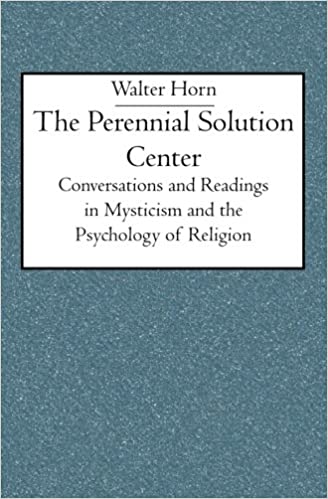
The readers of this blog, who I presume are more interested in democratic theory than the psychology of religious experience may not realize that I once wrote a book (nearly 20 years ago) on mysticism and various religious practices:


So, these matters have some urgency for me. But I have come to the conviction that none of that actually matters so much. It’s not that I am no longer interested in those things--particularly Eastern religious views and practices--or that I no longer think that the tenets they preach have real importance for everyone’s life and wellbeing. That is not the case at all. But I have come to believe that, if we are to have any democracy at all, just as the principles underlying it must be exalted over any such legitimate concerns as climate change, abortion or prenate rights, what's owed to labor or capital, taxation policy, etc., its axioms of equal rights and procedural fairness must take precedence over every religious tenet too–from “the golden rule” and “turn the other cheek” to “the four noble truths” and "not this, not that." Taking any one of these religious doctrines to trump democracy means that the views of one’s peers on what is most important will sometimes be rightly demoted. We will have come to think that our own take on some value is to be given the highest importance regardless of what anybody else may believe. And that is an authoritarian take on the way public policies should be made. 


No doubt this will be an extremely difficult conclusion for most people to reach. Certainly it has not been easy for me (see my discussion of Thanatos in my democracy book for a particularly dramatic example). But just as the great Oregonian progressive W. S. U’ren was at some point forced to demote his abiding love for a Georgist take on land value taxes in order to become a democratic reformer, all true democrats must always attenuate their own particular ends to a level below those of the people at large, always treating each person equally. For if they fail in that, they will cease to be any kind of authentic democrat at all. 


So let those “enlightened ones” among us take what positions they will on suffering, emptiness, aggregates, selfhood, being, Brahman, Jesus, cravings and all the rest. If their views do not coincide with the general will, while they must given an appropriate volume of voice in public matters, they need not get their way–regardless of how crucial their faith may seem to them, or even how crucial it actually is to all of us. The more good, the better must be taken to prevail even over all of the religious credos. Indeed, it must take precedence even over the commands of any deity–no matter how great or good.

Monday, August 15, 2022

Democracy and Truth


My Hornbook review of Sophia Rosenfeld's fascinating Democracy and Truth: A Short History is now up at 3:16 AM Magazine here.

Thursday, August 4, 2022

Review of Democratic Theory Naturalized in The Journal of Value Inquiry


So delighted to see this thoughtful review of my Democratic Theory Naturalized: The Foundations of Distilled Populism by Daniel Layman. It's very generous, so I'm quite grateful and have but a couple of teensy nits I can't help but tug at.

The first one involves a sentence that suggests I don't believe in judicial review. I probably shouldn't blame Layman for this. Likely I was insufficiently clear on the matter in my book: perhaps I gave a misleading impression of my take on the judiciary when I defended a limited Reversal theory along the lines pushed by Teddy Roosevelt in his later, Progressive days. But, with or without Reversal, I'm a firm supporter of an independent judiciary and, more generally, the rule of law. Without that, I don't think there can be anything like authentic democracy--and that's kind of my summum bonum. There's a brief summary of my take on judicial review in a recent paper of mine on the inconsistency of legitimate democracy and "mob rule." (See especially footnote 23.)

My second (again inconsequential) beef is that The Journal of Value Inquiry only saw fit to mention the (wildly expensive) hardback edition of my text. There are now also the much cheaper paperback and e-book versions! Amazon sells the Kindle version for about $37. Still a lot, but quite a bit less than a C-note.

Anyhow, I'm done kvetching so you can start fetching! {But see my comment below!}

Sunday, July 17, 2022

Should "Legitimate" but "Unjust" Laws be Implemented and Obeyed?

  
     Gustav Radbruch         Franz Neumann


In my previous blog entry on Laws, Legal Systems, and Government Power, I tried to explain the difference between laws that I take to be authoritative and those that I want to call not just authoritative, but also legitimate. The idea was, roughly, that a societal norm within some polity which has the formal features of a law is authoritative if and only if it emerges from procedures which are correct at every turn. I then claimed that while only authoritative laws can be legitimate, legitimacy additionally requires that the government prescribing the procedure for making laws is democratic. What that means is a longer story (see my book). but I don't mean to suggest that only perfectly democratic systems have legitimate laws--after all, there may not ever have been a perfectly democratic system in the history of our planet. I'm not now (and likely never will be) prepared to provide precise minimum requirements for a governmental system to be considered "democratic enough" to produce legitimate laws. But I will repeat what principles I consider to be basic to democracy. There must be universal suffrage including those in their mid-teens; every person must be treated equally, with no discrimination allowed on the basis of race, gender, orientation, etc.; the majority should rule, counting each vote equally--but significant minorities should be given a voice in government with the volume of that "voice" mirroring the size of the minority; elections must be "fair" and consequently not buyable; both the referendum and recall should be available to the electorate; and the elected governments must make good faith, transparent efforts to get the electorate what they want based on appropriately aggregated vote tallies.

It seems impossible to deny, however, that governments satisfying those minimal conditions could enact horrific laws that would, therefore, be legitimate according to my theory. Even if the principle of equal treatment prevents any law from calling for discrimination against any particular ethnicity or gender, it could still be the case that a legitimate statute is randomly inhuman or results in brutality to everyone, indiscriminately. Must judges apply such laws? Must citizens obey them? In the blog entry linked to above, I promised to do what I could to answer these questions. Here is my attempt.

The two distinguished gentlemen pictured above were German jurists in the Weimar Republic who were particularly interested in whether what the Nazis were soon to put into could reasonably be called laws, and they wrote about what obligations (if any) on judges and regular citizens followed from the passage of such commands. Now, of course, one can reasonably complain both that Hitler was not governing pursuant to majority rule and that very many of his putative laws certainly did involve unfair discrimination (quite essentially, in fact). So it's unproblematic to deny legitimacy to every edict emanating from the so-called "Third Reich."

But let's make this harder by considering some putative law that derives from a regime that is democratically elected and which doesn't discriminate against Jews (or Catholics or Blacks or Gypsies or Gays). This edict could surely remain brutish. Suppose, e.g., that the polity simply won't allow any citizen to emigrate. In fact, imagine that a law is (appropriately) enacted according to which, if anybody is caught trying even to briefly vacation elsewhere, that person may be disemboweled! (If we like, we can  even hypothesize that after its passage, this anti-emigration law was subjected to a fairly conducted referendum and was kept in place by a majority of the populace.)

It might seem then, that, according to a strictly positivist legal theory--even one which contains my democracy criterion--(i) every judge should condemn to a horrible death anyone found guilty of violating this duly enacted provision, (ii) those with the prescribed duty (and scalpels) should carry out its hideous requirements, and (iii) if this polity utilizes juries (or trials at all!), everyone impaneled for such a case should declare guilty any individual he or she believes had the temerity to step over the border.

Does this hypothetical "law" show that legal positivism is a terrible mistake whether or not one adds democracy requirements to the criteria for  legal legitimacy? Can civil disobedience really never just be the right thing to do? Both Radbruch and Neumann meditated on this matter--a particularly crucial one after the fall of Weimar. For Radbruch, the moral was beyond any doubt. Positivism is acceptable only until a law is so horrific that it exceeds any reasonable bounds of decency. He wrote that, "One thing...must be indelibly impressed on the consciousness of the people as well as of jurists: There can be laws that are so unjust and so socially harmful that validity, indeed legal character itself, must be denied them."* Radbruch believed that there might be obligations to carry out and obey even some unjust laws, but that there must be a limit. That line is where "the conflict between statute and justice reaches such an intolerable degree that the statute, as 'flawed law,' must yield to justice."**  And he concluded that "Where there is not even an attempt at justice, where equality, the core of justice, is deliberately betrayed in the issuance of positive law...it lacks completely the very nature of law. For law...cannot be otherwise defined than as a system and an institution whose very meaning is to serve justice."

To the extent that this criterion, eloquent as it is put here, is conceived to essentially rely on the concept of equality of persons, it cannot not help us much, because we have already locked that criterion in when we insisted that only authentically democratic jurisdictions can enact legitimate laws. For there can be no democracy without equal treatment. We will, then, have to rely on Radbruch's more qualititative approach: it can't be legitimate if it's extremely bad. 

In a valuable paper on Radbruch written about a decade ago,***  Brian Bix warns that we should not confuse support or criticism of legal positivism with any particular position regarding what putative laws ought to be obeyed. He writes, "Legal positivism is a theory about the nature of law, even if it is too often confused with entirely different kinds of claims (e.g., about when and whether laws should be obeyed, or about how statutes and constitutional provisions should be interpreted).  Bix argues that it is crucial to distinguish any general theory concerning connections between law and morality from questions about how judges should decide any particular case and that Radbruch's admonitions must be restricted to the latter questions. According to Bix, one way of seeing this is to consider that legal positivism must be a theory about the nature of law in every conceivable jurisdiction while what judges should or should not do is necessarily a function of the particular system that the jurist happens to inhabit. Furthermore, as some jurisdictions clearly contemplate the use by judges of extra-legal norms in making their decisions, a determination that some proposition is not a law in those places would not entail what Radbruch wants--a norm absolutely requiring that any judge ignore the proposition in question because of the gross injustices it would call forth if enforced.

For our purposes here--involving the  appropriateness of civil disobedience among judges, jurors and citizens in particular circumstances--we can focus only on this second interpretation of "Radbruch's Formula," and leave more general questions regarding alleged necessary connections/divergences between law and morality to others. Let us, therefore, continue to call procedurally correct laws ensuing from democracies "legitimate," and focus only on when we may nevertheless ignore them. Radbruch says, roughly, that we may do so when and only when they are particularly terrible. But that seems to offer very little help. When is a command so immoral that it is really, really terrible?

Neumann also addressed this issue. In a 1952 paper on appropriate disobedience,**** he provides what he takes to be four essential characteristics of the content of any legitimate edict. Like Radbruch, he starts with the legal equality of all rational persons, and he adds that nothing requiring slavery can be legitimate, since slavery requires inequality. Second, he says laws granting or limiting liberty must be general and not apply only to certain specified individuals. Third, retroactive or ex post facto legislation affecting life or liberty are claimed to be improper and so need not be obeyed. Finally, he tells us that the agencies enacting, interpreting, and enforcing laws must all be sufficiently separate.


Neumann claims here, without much argument, that his principles two, three, and four are derivable from the first, equality-endorsing axiom. That seems to me an extremely interesting and important claim if true, because any such derivation would seem to prevent a number of versions of illiberality in authentically democratic regimes. But I confess that I cannot myself see how retroactive law-making or parliamentary forms of government--distasteful as they may be to many observers--are inconsistent with providing everyone with equal treatment and protection. Democracy alone does not seem to me to prevent certain types of official cruelty  (or require judicial independence) in instances where the people in that polity are themselves illiberal and cruel. In any case, if all the varieties of illiberality singled out by Neumann are made impossible by authentic democracy, I have not managed to see how or why.

Returning to his main argument, Neumann clearly believed that his four principles are all that we can appropriately agree upon as content-bases for legal legitimacy; but he also worried that they will not seem sufficient to everyone. He writes that his four reeds "may sound very thin and unsatisfactory."  But he thinks that this will be so "only if we forget that man may morally resist any command of his government if his conscience impels him to do so." Why? Because, Neumann insists, "There cannot be made a universally valid statement telling us when man’s conscience may legitimately absolve him from obedience to the laws of the state. Every man has individually to wrestle with this problem. If he decides to resist, he cannot invoke a 'right,' but he will evoke our sympathy. Beyond the four statements on the unconditional right of resistance, each man must make his decision." (Interestingly, he appeals to Hegel's early-19th Century Philosophy of Right for this individualistic stance.)

A "you'll-have-to-figure-this-out-yourself" stance certainly appeals to me in this area, for, as I have written elsewhere, while I believe that moral claims are like factual propositions in either being true or false, and even think that they may be warranted to some extent for a particular individual (perhaps by her emotional responses to various states of affairs), no human being seems to me ever to be in a position to know the truth of any ethical judgment. For it is my view that any such knowledge would require a reasonable and at least partially justified general theory of morality, and I don't think those exist.***** Moral claims therefore seem to me akin to astrological predictions, for those are also true or false, and may in some cases be inductively warranted. But, being (let's say) "unhinged," they can also never be known to be the case. As my book shows, I am much more comfortable about our epistemic relations with propositions involving prudential value than with those involving morality.

To conclude, whether or not civil disobedience is appropriate in a particular situation is, without doubt, a strictly moral matter, and as I am a skeptic with respect to moral knowledge, I believe Neumann was right. We will each have to let our own conscience be our guide.


"Five Minutes of Legal Philosophy" (1945)

** "Statutory Lawlessness and Super-Statutory Law" (1946)

*** "Radbruch's Formula and Conceptual Analysis" (2011)

**** "On the Limits of Justifiable Disobedience" (1952)

***** Most of those that have been offered have been species of hedonism, and no form of moral consequentialism seems to me to have fared very well after being subjected to centuries of criticism. I will admit, however, that I have just been informed of  a new paper suggesting an entirely different sort of theory: Andre, DeBove, et al., "Moral Cognition as a Nash Product Maximizer" (2022). Perhaps something along those contractualist/game theory lines will do better than any version of consequentialism has to date, though I have my doubts.

Monday, June 20, 2022

My Review of Rick Hasen's Cheap Speech


Here's an excerpt: 

"Suppose you are on a sea vessel that is rapidly taking on water. You are given an honest description of the cracks in the hull, and you are told, too, what steps the crew and passengers might take toward mending those holes and what the realistic chances are that any of these procedures might do all that could reasonably be expected of them. This crisis response, which I take to be analogous to what Hasen has provided in the area of democracy, would all be well and good, I think, if (i) water were not being taken on in an amount and speed that will surely sink the ship within an hour, and (ii) the crew were not simply passing out a couple dozen ladles."

You can read the whole thing here

Thursday, June 16, 2022

What makes for a stable democratic regime?


In my newly published paper on Harry Eckstein's "congruence theory" of democratic stability, I make a plea for political scientists to attempt either to confirm or disconfirm my simplified "majoritarian consonance" version.

My sense is that a comparative politics guru could likely settle this "authority patterns" doctrine once and for all quite quickly. So I hope some of those folks will check it out!

(BTW, if my article seems dry or abstruse, it may help to contemplate while reading it that after escaping Nazi Germany as a child and in spite of publishing a ton of important work and teaching at Princeton as an adult, Eckstein somehow also managed to get married four times.)

Friday, June 3, 2022

Democratic Theory Naturalized is Out in Paperback!


Lexington Books has just notified me that my book, Democratic Theory Naturalized, will available in paperback this Fall at a price of $39.99.

I like this of course, but if you don't want to wait until September, there's already an e-book version available at $45, and Amazon is currently selling the hardback for $53 (unlike R & L, which still lists it for over $100). See this for details.

I'd naturally like to see a price that's in the vicinity $9.99--I mean, in spite of the fact that the book is...you know... absolutely life-altering, priceless stuff! But even a slightly cheaper imprint is obviously a good thing. And, as the book attempts to pound home repeatedly, The more good, the better.

Anyhow, if you've been waiting patiently for a paperback version, you can now order a copy at Rowman & Littlefield or Amazon! Cheers!


Tuesday, May 17, 2022

Does Democracy Require Meritocratic Elitism?


Anne Applebaum's new book is called The Twilight of Democracy, and she is quite distraught about the fading away of...well...something. It's certainly not democracy, though. She's in mourning for the diminution of the nearly worldwide power and prestige once held by her particular cohort: a group consisting mainly of wealthy, center-right, libertarian-leaning intellectuals and corporate big shots. 

If democracy requires such a thing as the majority having its way, there'd be no tears shed by Applebaum if it disappeared from the face of the Earth completely. What she regrets is the (perhaps only temporary) fading away of the credentialism, corporate power, and free markets that long worked together to keep center-right parties in power and could also be depended upon to shower her and her elite batch of friends and colleagues with accolades and riches in whatever Western nation they happened to live or visit. She may be right about the deficiencies of both right- and left-wing populist movements, but to hate racism and authoritarianism does not make one a democrat.

My complete Hornbook review of Applebaum's memoir can be found here.

Friday, April 22, 2022

Laws, Legal Systems, and Government Power


These days, I suppose that most people who think about the question of where laws and legal systems come from, have little doubt that they come from people. This view that our statutes, case law, and approved governmental procedures didn't somehow emanate from angelic legislators, but have been patched together here on Earth (like, it's often said, sausages) is called "legal positivism," and it's not only quite intuitive, it's been an extremely popular view--during my lifetime, anyhow. I suppose the "natural law" theory, though it still has its fervent adherents, had its heyday in St. Thomas Aquinas's era.

But if even if the general idea of positivism now reigns supreme, it can't be denied that there are some fairly deep differences among the positions advocated by some of positivism's most widely known champions. In particular, perhaps the movement's two greatest figures--the Victorian Benthamite John Austin and the 20th Century Oxonian H.L.A. Hart--were on the opposite sides of several central issues of legal philosophy. For example, while Austin insisted that every law is essentially an order backed by threats, deriving ultimately from the sovereign, i.e., the most powerful person or group in the land, Hart denied such a reduction. On his view, where there are laws, there must be rules, non-purely-behavioral norms that produce obligations from a specifically "internal point of view." So, while both philosophers were, let's say, Earthians rather than supernaturalists, Austin took the behaviorist (and exclusively "external") view that laws are just commands emanating from habitually-obeyed-and-subject-to-no-higher-power sources, so long as those commands reliably produce the demanded responses among those who are subject to them.

Each of those two eminent theorists required both the procedural imprimatur (to be authoritative, laws must have been created in the appropriate way) and habitual compliance among most citizens. But Hart argued not only that many laws simply aren't commands backed by threats of penalties for scofflaws, but also that, even if they were nothing but orders of that kind--each analogous to "Your money or your life!"  widespread habits of compliance (even among just the right people) would be insufficient to make them lawlike. To be obliged or compelled, Hart argued, isn't the same thing as to carry out an action as a result of an obligation. And Hart argued that laws uniquely carry obligitoriness--or at least they always produce that sense among the officials who are in charge of carrying them out. So, even in those cases where a large segment of the citizenry just obeys because they're worried about trouble they'll be in if they fail to do so, the appropriate internal attitude among those in charge will make a command or power-conferring rule a law.

Like all the most world-altering and influential philosophy books (and for all I know, this is true in every discipline), Hart's book has suffered from the notorious "thousand cuts" delivered by critics. As one philosopher put it to me long ago, when Plato wrote his Republic, Spinoza his Ethics, Kant his first Critique, Rawls his Theory of Justice, Wittgenstein his Tractatus, etc., it was like a huge and majestic elephant taking a step out from a dense jungle into an open, sunlit field....only to be slowly and painfully devoured by a multitude of army ants. Whether or not that analogy is entirely fair, it can't be denied that Hart's classic has suffered that fate to some extent. In particular, numerous criticisms have been levelled at his reliance on  "secondary rules" to do the work of giving putative laws the teeth of authority and legitimacy. Hart claimed that it is these second-order rules, items like To be engrossed in the House, a bill (such as a penalty for burglary) must receive three readings" which provide the authority of first-order instructions regarding how we are supposed to behave. He argued that it is the existence of secondary rules and their placement in the array of injunctions and proper procedures in which they are found that indicate when any lower-order rule is part of a legal system. 

Hart dubbed the key secondary rule (or rules) by which we can tell both that some instruction is a part of a legal system and just which system it belongs to "the Rule [or Rules] of Recognition" and, unsurprisingly, the literature both supporting and criticizing this innovative concept is particularly immense. It is not my intention to rehearse or reject these critiques here. It may well be that attempts to define "law" will always mirror what Steven Sondheim once suggested to Ned Rorem is the case for operas. Sondheim said that if we want to know whether some piece of musical theater is an opera rather than a musical, the best way is to check whether or not its performances take place in opera houses. And it may be the same thing for determining what makes for the sorts of laws that relate to jurisprudence: perhaps what matters is simply the extent to which the items are found to be relevant to judges, police, governors, corrections officers, tax collectors, legislators, and so on.

No doubt this suggestion will be claimed to reflect an objectionably circular approach: knowing which are the appropriate "judges" or "legislators" to consult is no different from knowing which buildings are really opera houses. Is it enough that some building happens to be called "The Royal Opera House"? Couldn't "Pajama Game" be performed there anyhow? The point is that, since the terms "law" and "opera" are both specimens of what are sometimes called "cluster concepts," it may not be possible to do much better than arguing in a circle or producing Wittgensteinian metaphors about family resemblances or the interweaving strands in a rope. There just may not be any precise group of necessary and sufficient conditions to which one can point.

In any event, my general sense--and I believe it's a fairly orthodox position--is that Hart's arguments to the effect that legal systems cannot be reduced to Austin's "orders backed by sanctions" are generally sound. There is evidently more to a law of the land than "Your money or your life!" even when that threat comes from someone with the clear power to act on it.  To point this out is not to say much more than that a tiger compulsively circling her cage is not "following a rule": there seems little doubt that laws are some species of rule (or "norm"). Furthermore, a law declaring the cranberry muffin the official Massachusetts baked good doesn't even require a single person to do a single thing. So it's pretty clear that a behavioristic command theory can't be right. 

I do think, however, that Austin and his greatest British successor were not quite so far apart as Hart believed with respect to what makes an instruction or other rule a law. This point can be gleaned from a couple of the earliest published complaints about The Concept of Law. I refer here to objections made by two of the lead "army ant" soldiers who reviewed that masterpiece in the early 1960s: George Pitcher and Rolf Sartorius. 

It will be recalled that Hart claimed that the combination of primary and secondary rules provided "the key to the science of jurisprudence." This may be so, but both Sartorius and Pitcher were quick to point out that the mere existence of "a union of primary and secondary rules" could never be sufficient to produce a legal system of the sort in which Hart was interested. After all, not only does the Catholic Church have its canon law, complete both with various penalties for non-compliance and with detailed methods of adjudication, but even the NCAA has a penal code! Surely, when we want to set off the system of laws governing a particular country or political subdivision, we generally mean to exclude church or club "laws" and their own systems of governance. We may concede to the cluster theorists that we cannot provide a perfect specification of necessary and sufficient conditions to demarcate those legal systems in which we are particularly interested, but it must at least be possible to give a rough and ready way to separate such systems from the rules of the Church of Scientology and those of the NFL! The problem is that these other codes can't reasonably be denied to also be "unions of primary and secondary rules." In addition, each may have its own penalties for failures to comply, each its own methods for amendment, and each its own adjudication architecture. We can thus see that the presence or absence of some other feature must prevent them from being "real legal systems." But if it isn't those formal characteristics, what does make the difference?

To be fair, Hart was not unaware of the problem pointed out by Pitcher and Sartorius. Indeed, he had anticipated the need for an additional mark of the legal in his book when he appealed to what he called "the minimum content of Natural Law." He recognized that the purely formal characteristic of "being a union of primary and secondary rules" was insufficient and suggested that true laws must also reflect a certain (if vague) sort of humanistic goal to be part of an authentic legal system. It seemed to him obvious that  "there are certain rules of conduct [like, say, not murdering anybody whose sandwich you think you might want] which any social organization must contain if it is to be viable," Hart therefore proposed that bona fide legal systems are limited to those in which the primary rules contain such "minimum content."  

As may already be clear from what has been said above, this move from form to substance won't work either. Indeed it was pointed out in a particularly acute anonymous Note in the Yale Law Journal of 1975 [which I understand--thanks to Nelson Barrette--to have been written by eventual Yale Law School Dean, Anthony Kronman back when he was himself a student at that institution].  The problem is that no particular content, however laudable, can actually cut the ice as a distinguishing feature of law. After all, religious and moral codes famously express the same sort of goals, and many club rules do as well. Presumably, for example, contestants in a sanctioned chess tournament are forbidden from strangling their opponents during a match--or even from throwing captured bishops at them. 

Hart suggested several other candidates for marks of true law, but Kronman's article patiently dismantles all of them....except one. And that characteristic is a matter neither of a rule's form nor its content.  What makes an ostensible law part of an authentic legal system is that it does not require a dispensation from any independent system to implement physical sanctions. For consider: if the NFL wishes to enforce any of the fines on its books, it will be able to do so reliably only if such actions are allowed by the U.S. government. Similarly, if a church wants to impose corporal punishments on those it considers sinful, those actions will have to be allowed by the state. As noted by Kronman (following Max Weber), a modern state is a "community that (successfully) claims the monopoly of the legitimate use of physical force within a given territory." Thus, for any system but that emanating from "the sovereign," an explicit dispensation to apply physical penalties from that sovereign is required. It is that feature alone that makes any putative arrangement of "laws" an authentic legal system. And that is neither a matter of form nor of content.* Indeed, it seems to trump content considerations.

This may seem like an arcane matter of philosophy, but it has great practical importance: it provides us with a necessary condition for any putative law to have actual authority. As I argued both in my 3:16 AM review of the recent Huemer/Layman book on political authority and my own book on democratic theory, to have bona fide authority, a rule must have the right parentage. It must come from that entity that has the most power in any region. 

So much for authority: elements of legal systems must have proper form and causal background. But what about "legitimacy"? Shall we call every authoritative law legitimate? Many will deny this. They will say that to be legitimate, a law must also be morally acceptable, that any putative law allowing for the murdering of anyone whose sandwich one covets--or, to take a more serious case, an imprecation calling for the rounding up and murdering of Jews, Gypsies or Catholics--is always illegitimate, no matter how "authoritative" its history and formal/relational characteristics may make it. I agree with that myself (at least with respect to the rounding up and murdering case). Does this mean that we must bring back content--that to be legitimate laws must reflect the appropriate ethics? Must the widespread appeal of such intuitions spell the end for legal positivism of every stripe? Certainly it has seemed so even to many of the friendliest critics of both Austin and Hart.  

I don't think those critics are correct. I believe there is a way that even those who are skeptical about all claims to know the truth of some proposed ethical maxim can manage to distinguish the subset of authoritative laws that are legitimate from those that are not. In my view, this is the point at which self-governance, i.e., authentic democracy, comes to the rescue. I have argued, both in my book and elsewhere (see, e.g, my interview with Richard Marshall) that there is nothing like a plausible background theory to substantiate our moral intuitions--even if, in some cases they are warranted (by our emotional responses) and happen to be true. They are in this way like astrological claims: such warrant as is provided by our emotional sympathies may be no more reliable than induction from previous astrological forecasts that happen to have been successful. To put this in terms made famous by Susan Haack, our moral intuitions are like "across clues" in a crossword puzzle containing not a single "down clue." It is not that moral propositions are "subjective" or necessarily "true only relative to a particular society or culture." Still less am I claiming with J.L. Mackie that every moral claim is erroneous. What morality seems to me lack is neither objectivity nor truth, but  a background theory with sufficient plausibility to provide anyone with knowledge of a single moral ought proposition. Utilitarians and other consequentialists have tried to provide such theories, and divine command theorists have as well, but nothing has found wide acceptance. Indeed it is my view that no proposal has made much more sense than the astrologer's admonition that "The stars impel, they don't compel." We have evidence only in the form of across answers that fit.

But if we can't actually know any ethical truths, we can take some comfort from the fact that our our epistemic situation may be in much better shape with respect to prudential values--that which makes some thing or event, not necessarily good, but good for us. This is so because it is reasonable to postulate that, at least ex ante, getting what one wants is a (prudentially) good thing. That second helping or fancy TV may not be good for us in the long run, but if we forget about consequences for a moment and just focus on whether it is intrinsically better to get what one has freely chosen than to strike out, it seems sensible (though assuredly not provable) to say that successfully obtaining what we freely choose is better than nothing (i.e., better than utter failure to acquire what we want).** Again, we need make no assumption that any particular choice, whether or not coerced, must produce any long-term benefits for the chooser. For it is of course the case that any one of them might be disastrous not only in the eyes of a third party expert, but even according to the ex post assessment of the chooser herself

What does any of this have to do with legal positivism? In brief, it provides a rational basis for the provision of legal legitimacy in self government. This is because what is true of individuals seems to also be true of groups: getting more of the things groups or societies want is an intrinsic ex ante prudential good for groups as well. This means that a shift toward prudential values for our foundations allows political theorists, for perhaps the first time, to explain legitimacy without reference to morality. We can instead say that authoritative laws will have the additional feature of legitimacy if and only if the (monopolistically powerful) states from which they emanate are truly self-governed. Which democracies actually are the "authentic" ones? Roughly, they are the ones in which frequent and fair voting mechanisms reliably result in good faith (and transparent) attempts by sovereigns to get the majority what it wants, while also providing minorities with appropriate voice in government.***

The first and most pressing objection to this theory that is likely to come to mind may bring us right back to the threat of the carting off and slaughter of whatever ethnic, racial or social group the majority happens not to like. How can simply satisfying the desires of the majority prevent such horrific occurrences without the importation of moral values? Aren't there cruel majorities to be found in the world? 

The answer to these questions that are provided by what I have called "distilled populism" is that such values as are needed to prevent those sorts of atrocities can be derived from the concept of "fair voting" alone. That's because there can be no authentic democracy unless every citizen is treated with equal respect. Thus, we don't need to say that unequal treatment is evil. We need only understand that we cannot actually discern what the people want if unfair discrimination is not prohibited. Since real democracy absolutely requires both the equal treatment of votes and equal protection of individuals, even if it arguably cannot without majority disapprobation prevent a system of (legitimate) laws allowing for whimsical murders by sandwich coveters, it must always prohibit a Holocaust. Moreover, I believe that no legitimate legal system can even allow for such anti-democratic atrocities as exclusive reliance on first-past-the-post electoral schemes; indeed, any system including the U.S. Electoral Collage or the U.S. Senate's Filibuster rule cannot enact rules that will pass a legitimacy test requiring authentic democracy. And majoritarian strictures go beyond equal treatment and protection. They will also limit restrictions on free speech, association, and assembly--all, again, without appeal to what may or may not be ethical or "endowed by our creator." They are simply needed to determine what the people really want. What's more, for elections to be fair, "political rights" would seem to have to go farther than the U.S. Constitutional prohibitions, which say only what sorts of rules our government may not enforce.  

I won't try to restate my entire theory of distilled populism here: the full picture may require reading my book. But I do want to close this precis by turning back to Hart's version of positivism--and the youthful Anthony Kronman's note on it. Good as the later piece is, I find that it did overstep a bit. The problem involves its concluding lapse into Austin's behaviorism. One can--indeed one must, to get this right--accept Austin's causal theory without adopting any picture that entails that a successful Skinnerian training of the citizenry to respond appropriately to governmental commands would be a legal system.  Donald Black's quite extreme 1976 book, The Behavior of Law, put it that "Law is governmental social control....a quantitative variable [that] increases and decreases." Well, sort of, but nothing prevents a government from closely controlling the activities of its citizens without having a single genuine law on its books. Kronman claims that Hart and Austin ultimately agree that "A legal system is a set of rules laid down for the guidance of human beings by a determinate person or group of persons having power over them by virtue of their effective monopolization of the physical sanctions within a particular jurisdiction." This rule-containing description is better than Black's reliance on behaviors alone, but if we are interested in legitimacy as well as authority, not every "determinate person or group" (i.e., government or sovereign) can make legitimate laws by promulgating rules and having the power to enforce them without dispensation from any other person or group. Authentic democracy is also needed. 

To conclude, I believe that Austin, Hart and Kronman, while generally on the right track regarding what makes for a legal system, get some important details wrong. If the U.S. has laws--and certainly it would be a gross violation of common usage to deny that!--their existence, as summarized above, is a result of the formal and causal properties necessary for authoritativeness to emerge. But there are problems. For one, as authentic laws may fail to be regularly enforced or even fall into complete desuetude, social habits can't even provide necessary conditions. Furthermore, since even cranberry muffin designations may be correctly enacted by the right entities, full-blown positivism cannot place its faith in "minimum content" or "inclusionary" provisions either. Not only can genuine (i.e., authoritative) laws be completely ignored by both citizens and relevant officials, they can be utterly stupid, pointless, or worse. Thus laws can't depend solely on either societal habits or ethical characteristics for the sort of propriety natural law theorists have sought.

But natural lawyers and other anti-positivists seem to have been correct when they have complained that the conjunction of the required formal properties and appropriate causal background is not sufficient for the provision of legitimacy. Where I differ from those critics is that I believe that it is not morality that is needed anywhere to fill that gap, but democracy, which relies on prudential, not moral values. 

Being no expert either in comparative law or history, I must admit to not being entirely sure whether a single legitimate law has ever been created anywhere. I am fairly confident, however, of the non-existence of any legitimate Federal law in the history of the U.S., simply because of the many defects in what has been so generously called "democracy" since this nation's birth. But if this conclusion does not entail either that we have no legal system in America or that no ostensible Federal laws need be obeyed, we are left with a difficult parting question. Which ones should we follow and which ones  may--or even should be--ignored? Given a prudential-value-based view like mine, are there any authoritative laws that we ought not--or at least need not-- follow? Those are extremely tough nuts to crack, and I shall postpone any attempt to shell them for another day.       


*Thus, an acceptable theory of laws, like the Kripke/Putnam theories of proper names and natural kinds, will be essentially causal.

**For a more detailed look at my attempt to provide a plausible background theory for prudential values (based on an idea put forward by mid-20th Century value theorist, Everett Hall), see my book Democratic Theory Naturalized.

***I have tried to summarize my thoughts on the essential features of authentic self-government here, but there is, again, considerably more detail in my book.